

Why Heat Treatment Is Required for Raymond Mill Grinding Roller Shaft and Central Shaft?
- Time:2026-11-20
- Views:0
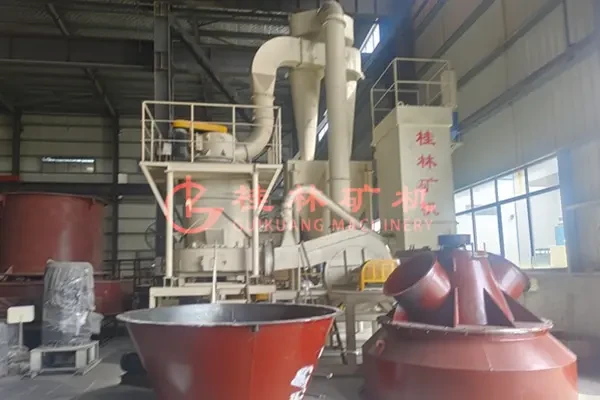
Heat treatment for the grinding roller shaft and central shaft of a Raymond mill is a core process that determines shaft strength, service life and overall machine operation stability. Shaft accessories bear complex and variable working loads. Only shafts that have undergone quenching and tempering heat treatment can meet the requirements for long-term stable operation of the Raymond mill.
In the selection of Raymond mill accessories, the heat treatment of the grinding roller shaft and central shaft is the most frequently consulted technical issue by customers. Many customers wonder why shafts with the same appearance can differ in price by several times. The answer lies in whether standard quenching and tempering heat treatment is implemented.
Principle Analysis of Heat Treatment for Raymond Mill Shaft Accessories
Standard Raymond mill shaft accessories adopt quenching plus high-temperature tempering (quenching and tempering) process. By changing the internal metallographic structure of steel, it achieves an optimal balance of strength, toughness, wear resistance and dimensional stability.
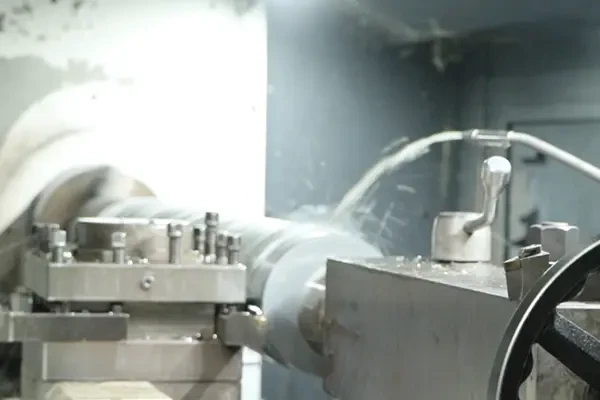
During overall quenching, the rough-turned shaft is heated above the critical temperature, held and then quickly cooled in water to form a high-hardness structure inside the steel, improving the strength and hardness of the shaft.
High-temperature tempering at 500~650℃ is followed to eliminate high brittleness caused by quenching. The internal metallographic structure obtains high strength, high toughness and good wear resistance, meeting the strict requirements for long-term stable operation of Raymond mills.
| Advantages of Raymond Mill Shaft Accessories after Heat Treatment | |||
| Bending Strength | Impact Resistance | Wear Resistance | Stability |
| Increased by 30%~50% to prevent bending deformation under heavy load | Greatly improved to resist instantaneous impact during grinding | Wear resistance of bearing position and oil seal position is more than doubled, avoiding bearing inner ring slipping and oil seal failure | Dimensional stability is greatly improved, and coaxiality remains stable for long-term use |
What Risks Will Be Caused to Raymond Mills If Heat Treatment Is Omitted?
Some manufacturers sell shafts directly after turning round steel to reduce costs and shorten production cycles. Although these non-heat-treated shafts look similar to qualified ones, they have huge performance hidden dangers and may cause heavy economic losses. Insufficient strength leads to bending deformation, poor wear resistance causes rapid abrasion of bearing seats, unstable dimensions bring coaxiality deviation, and finally result in frequent shutdown and maintenance of Raymond mills.
Necessity of Heat Treatment Combined with Actual Working Conditions of Raymond Mills
The shaft accessories of Raymond mills are under complex and variable working loads for a long time. Only standard quenching and tempering heat treatment can guarantee long-term stable operation of the equipment.
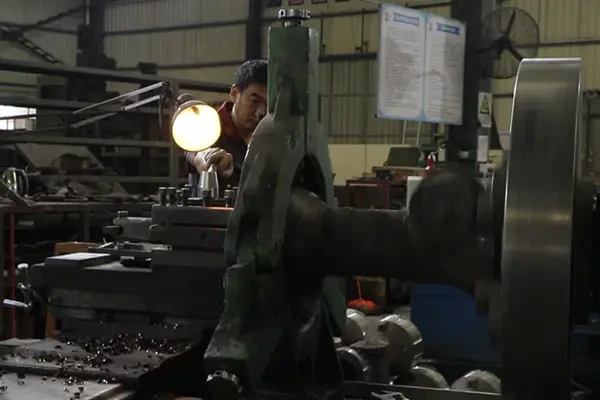
Grinding Roller Shaft: Key Component with the Most Complex Stress
The grinding roller shaft is installed inside the grinding roller assembly. It revolves with the plum blossom frame and drives the grinding roller to rotate. During grinding, it bears huge outward swinging force, material impact force and repeated alternating working loads.
Under such complex stress conditions, the grinding roller shaft must feature high impact resistance, high bending resistance, excellent wear resistance of bearing position and good dimensional stability. These performances can only be achieved by heat treatment.
Central Shaft: Core Load-bearing and Transmission Component
Located in the center of the Raymond mill main unit, the central shaft bears the total weight of grinding roller assemblies and plum blossom frame, transmits motor torque and ensures coaxiality of the whole grinding system. It is mainly subjected to torsional moment, radial bending moment and alternating fatigue load instead of simple compressive load.
Once the central shaft is slightly bent or its bearing position is worn, it will trigger a chain of problems including whole-machine eccentricity, violent vibration and uneven wear of grinding roller and grinding ring. Therefore, the central shaft must have high strength, fatigue resistance and dimensional stability, all of which rely on heat treatment.
How Does Guilin Mining Machinery Produce Raymond Mill Shaft Accessories?
Guilin Mining Machinery always adheres to the principle of no omitted processes, no fake materials and no skipped heat treatment. We adopt national standard high manganese steel, alloy steel and other wear-resistant materials to guarantee product quality from the source.
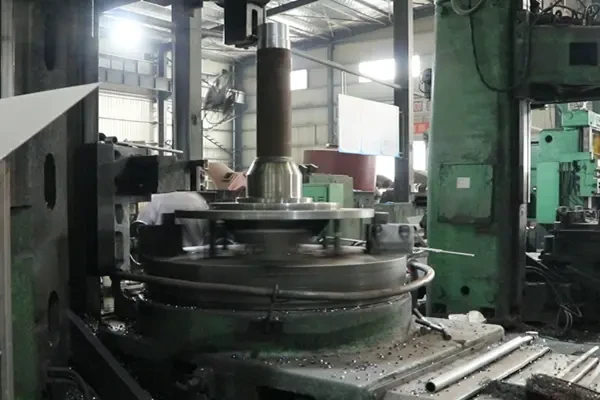
The production strictly follows the standard process flow: "Rough Turning - Heat Treatment - Semi-finish Turning - Finish Grinding":
Cutting: High-quality round steel is cut accurately according to drawing dimensions, with sufficient machining allowance and deformation allowance reserved for heat treatment.
Rough Turning: The cut blank is rough turned into shaft blank to remove excess base material.
Heat Treatment: Quenching and high-temperature tempering (quenching and tempering) is carried out on rough-turned shaft blank, which is the core procedure of shaft production.
Semi-finish Turning: After heat treatment, semi-finish turning is performed to remove surface scale and correct tiny deformation caused by heat treatment.
Finish Grinding: Finish machining and grinding are conducted on bearing positions and oil seal positions to strictly control surface roughness and assembly dimensional accuracy.
Inspection: Key indicators such as coaxiality, circular runout and hardness are inspected item by item to meet design requirements. Qualified products go through rust prevention treatment before warehousing.
We assign dedicated inspectors for each process. Hardness sampling inspection and three-coordinate coaxiality test are carried out for every shaft before delivery to ensure all key indicators meet industry standards.
- Previous Article:Not Available
- Next Article:Can Raymond Mills Grind Multiple Materials Together?
 Home
 Products
 About
 Call