

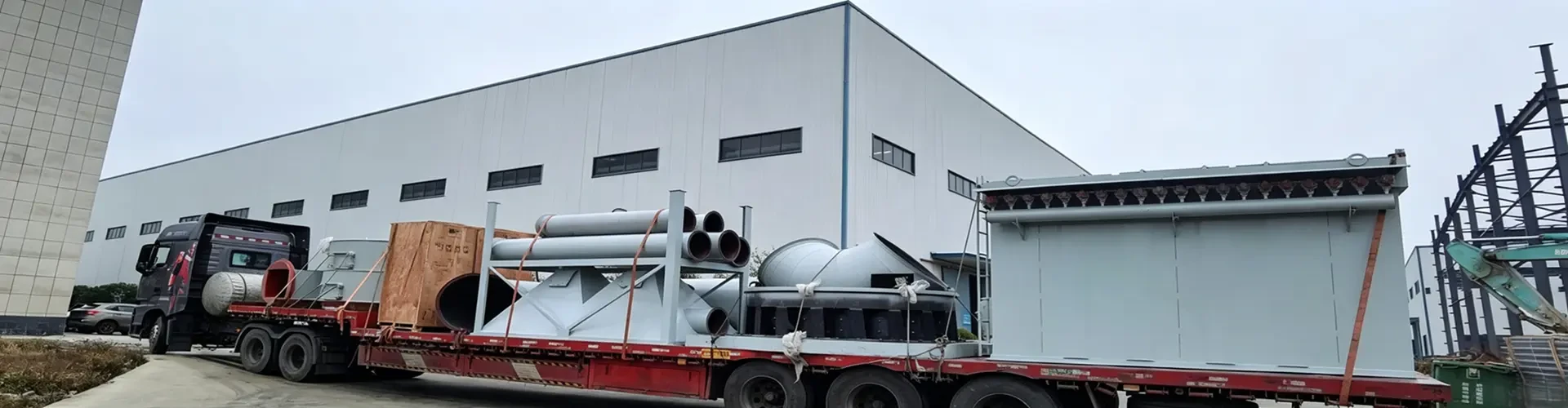
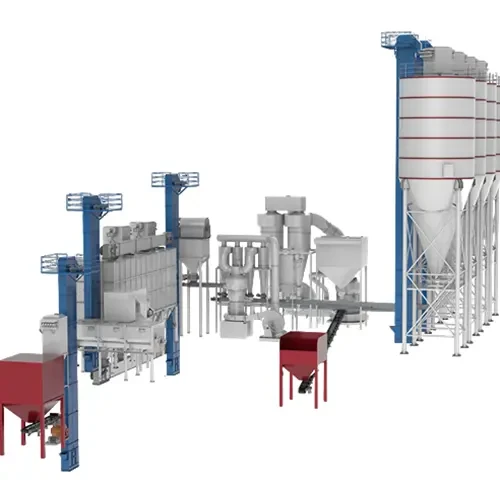
In the field of powder processing, material properties directly govern grinding‑mill selection and process design. Its particle‑size distribution, specific surface area, flowability, abrasiveness, adhesiveness, hardness, moisture content and chemical properties will affect the system layout for crushing, grinding, classification, conveying, drying, storage and packaging. Scientific matching of suitable equipment and techniques helps boost grinding efficiency and system stability, which serves as the key to building cost‑effective and high‑performance grinding production lines.
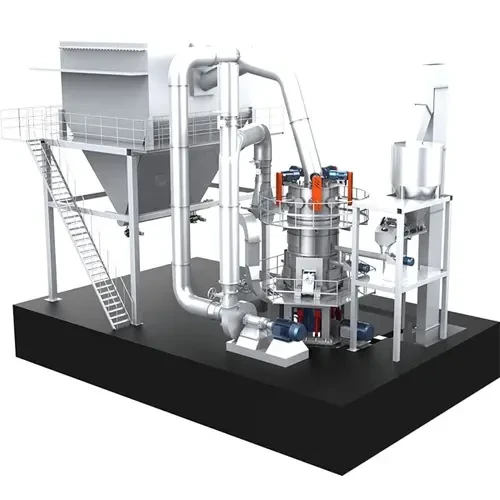
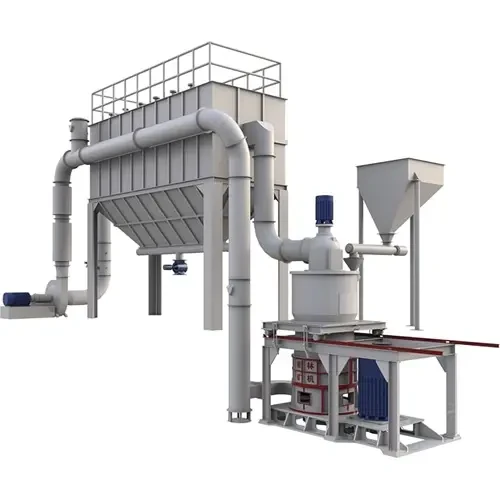
Non‑metallic mineral grinding usually begins with coarse crushing using a jaw crusher. Raw materials are then pretreated by iron removers, vibrating screens, dryers and other equipment to ensure the purity and whiteness of finished‑product powder. Based on material characteristics, required powder fineness and production‑capacity demands, major available machines cover Raymond mills for medium‑fine powder processing, vertical roller mills for mass‑scale production and ultrafine grinding mills for superfine powder manufacture.
Metal‑ore grinding generally adopts the process flow of more crushing and less grinding. Raw ores go through multi‑stage crushing with crushers, followed by pretreatment equipment including high‑intensity magnetic iron removers, vibrating screens, ore washers and dewatering screens, before being fed into the grinding mill. Finished powder can undergo purification, modification or dewatering treatment as required, supported by dust removal and wastewater recovery systems.
Coarse Crushing: A jaw crusher is employed to crush raw ore down to approximately 200~300 mm.
Medium Crushing: A cone crusher or impact crusher further breaks coarse‑crushed materials to roughly 50~100 mm.
Fine Crushing: A cone crusher reduces particle size to ≤30 mm to prepare materials for the grinding stage.
Grinding of industrial solid waste serves as a core technology for resource recycling, environmental protection and emission‑reduction. Solid wastes such as furnace slag, steel slag and fly ash can be processed into high‑value‑added green powder materials. This practice cuts resource consumption and prevents environmental pollution. With outstanding energy‑saving performance, high efficiency and large‑capacity processing capacity, the vertical roller mill is the mainstream equipment for large‑scale solid‑waste grinding projects. For small‑and‑medium‑scale operations, the Raymond mill stands out for its cost‑effectiveness and acts as the preferred technical solution.
Grinding for chemical raw‑materials imposes strict requirements on powder quality and operational safety. The grinding‑mill system shall adopt anti‑contamination and explosion‑proof designs. Grinding components are generally made of stainless‑steel or wear‑resistant ceramics to avoid metallic contamination and guarantee powder purity. Meanwhile, nitrogen‑sealed protection and explosion‑proof fittings are equipped to build up a sealed, inert and explosion‑resistant grinding system.
Ordinary grinding mills fail to deliver efficient processing for materials with distinctive physical or‑chemical characteristics, including sticky‑moist calcium hydroxide, high‑toughness fibrous wood and ultra‑hard silicon carbide. Custom‑designed dedicated equipment is selected according to material properties, such as full‑system anti‑adhesion calcium‑hydroxide grinding mills, high‑shear wood pulverizers and wear‑enhanced silicon‑carbide grinding mills.
Featured Products
Telephone/WhatsApp:+8613677868426
Email:guikuang@guikuang.com
Address:No.8666,Hunan Road,Pudong District, Shanghai,China
Plant:High‑speed Rail Economic Industrial Park, Guilin, Guangxi


 Home
 Products
 About
 Call