

How to Choose a Supporting Dryer for Raymond Mill?
- Time:2026-11-13
- Views:0
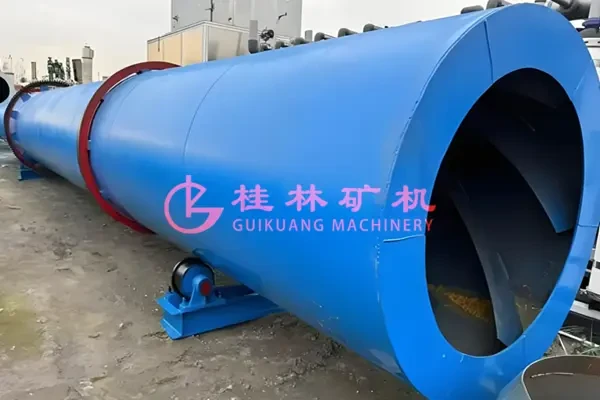
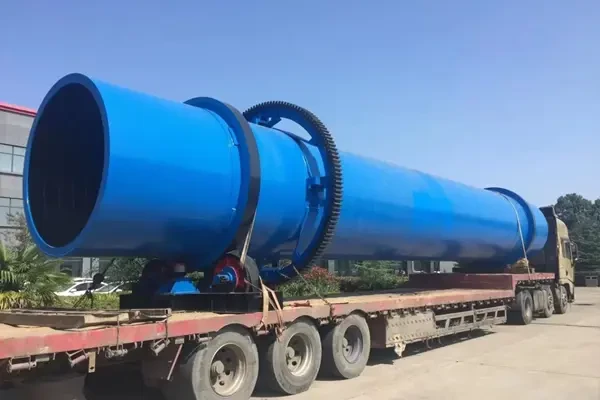
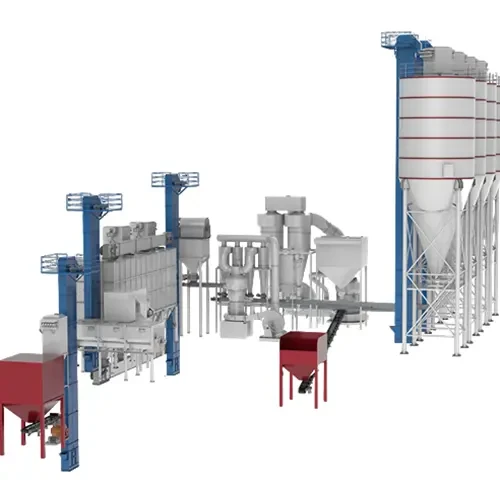
The dryer serves as the pre-drying equipment in the Raymond mill production line. Rotary dryers feature strong adaptability and wide application, suitable for drying lumpy and granular ore materials of various types. Vertical dryers deliver high thermal efficiency with a small footprint, and are mostly used for mass-production projects with limited space.
Functions of Dryers in Raymond Mill System
In a grinding production line, the dryer acts as pre-processing equipment. Its core goal is to reduce raw material moisture to ≤5% to meet the standard feeding requirements of Raymond mills. Improper selection will easily lead to material blockage in the mill, powder accumulation in air ducts, reduced output and higher energy consumption, which directly affect the stable operation of the whole production line. Properly matched drying equipment can effectively improve grinding efficiency, cut unit energy consumption, reduce unplanned downtime and ensure continuous and efficient operation of the grinding system.
Common Types of Dryers Matched with Raymond Mills
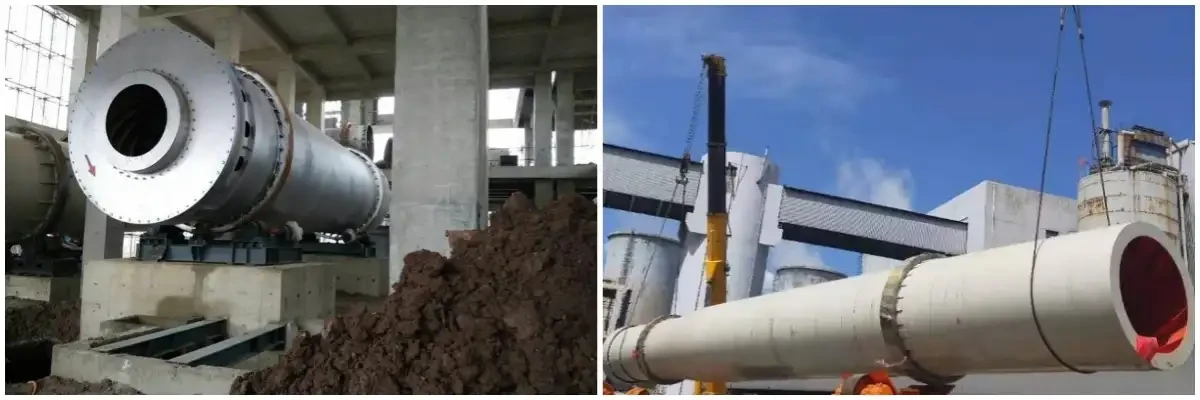
In Raymond mill systems, the widely used dryers mainly include rotary dryers (single‑cylinder / three‑pass type) and vertical dryers. The three‑pass type is an energy‑saving upgraded version of the single‑cylinder model with higher thermal efficiency and lower energy consumption. Note that these two conventional dryers are not suitable for high‑moisture, high‑viscosity and strongly agglomerated colloidal materials such as sludge and pure clay.
| Comparison and Analysis of Common Dryers for Raymond Mills | |
| Rotary Dryer | Vertical Dryer |
| Rotating cylinder structure; materials are continuously lifted and turned for full heat exchange with hot air | Vertical sealed structure; materials fall by gravity and complete countercurrent heat exchange with hot air |
| Thermal efficiency of single‑cylinder type: 30%~40%; three‑pass type: 50%~60% | Thermal efficiency: 65%~75%, compact footprint and more energy‑saving |
| Wide adaptability, handles ore materials of different lump sizes and normal moisture content | Compact layout for projects with limited space, stricter requirements on material specifications |
| Simple structure and easy maintenance; single‑cylinder model features lower initial investment | Complicated internal structure, limited feeding lump size and higher maintenance difficulty |
Selection Suggestions for Dryers Matched with Raymond Mills
Equipment Capacity
Small and medium production lines: Raymond mill capacity ≤10t/h. Rotary dryers are preferred for simple structure, high cost performance and convenient transportation.
Medium and large production lines: Raymond mill capacity 10~20t/h. Three‑pass rotary dryers are recommended to balance capacity and energy saving. For sites with space constraints, small vertical dryers can be adopted with strict control over lump size and moisture.
Large production lines: Raymond mill capacity ≥20t/h. Large vertical dryers are available if material uniformity is stable. Three‑pass rotary dryers are preferable for mixed materials.
Material Properties
Non‑viscous or low‑viscosity materials: For limestone, quartz sand, slag, coal powder and other ore raw materials, rotary dryers are preferred for strong anti‑fluctuation performance and low blockage risk.
Low‑viscosity, evenly lumpy materials: For homogeneous ores such as dolomite, feldspar and calcite, both rotary and vertical dryers are applicable. Make the final selection based on capacity and site conditions.
Site and Budget
Limited site and sufficient budget: Choose vertical dryers. They occupy less space and deliver high heat exchange efficiency with lower long‑term energy consumption. The drawbacks are strict feeding limits and higher maintenance difficulty.
Ample site and limited budget: Choose rotary dryers. They feature low purchase cost and easy repair, fully meeting basic ore drying demands.
Pitfall Guide for Dryers Matched with Raymond Mills
Over‑drying of Materials
Excessively high hot air temperature and long material retention time will cause excessive water loss. It not only boosts fuel consumption, but also increases dust generation, accelerates mill wear and reduces finished product stability, impairing grinding quality.
The correct practice is to reasonably adjust hot air temperature, air volume and feeding speed according to material properties and feeding moisture standard, dry materials on demand and stabilize finished moisture content.
Wrong Dryer Selection for High‑viscosity and Easily Agglomerated Materials
Feeding high‑moisture, high‑viscosity and agglomeration‑prone materials directly into conventional rotary or vertical dryers easily leads to material sticking on cylinder walls and machine blockage, resulting in frequent shutdowns for cleaning, and may damage internal components in severe cases.
The correct practice is to pre‑crush and disperse raw materials in advance, and switch to dedicated drying equipment such as dispersing dryers, flash dryers and twin‑shaft stirring dispersing dryers.
Only Focus on Equipment Price While Ignoring Long‑term Operating Cost
Blindly choosing single‑cylinder dryers just for low price brings low thermal efficiency and high fuel consumption. Although the upfront investment is low, the long‑term fuel cost remains high and pushes up overall production cost.
The correct practice is to comprehensively compare energy consumption and maintenance costs. Three‑pass rotary dryers require slightly higher initial investment but offer remarkable energy saving. The price gap can be recovered quickly with superior long‑term economy. Single‑cylinder dryers are acceptable for temporary small‑capacity lines with low feed moisture.
- Previous Article:What is an Ultrafine Grinding Mill?
- Next Article:How to Select the Elevator for Raymond Mill?
 Home
 Products
 About
 Call