

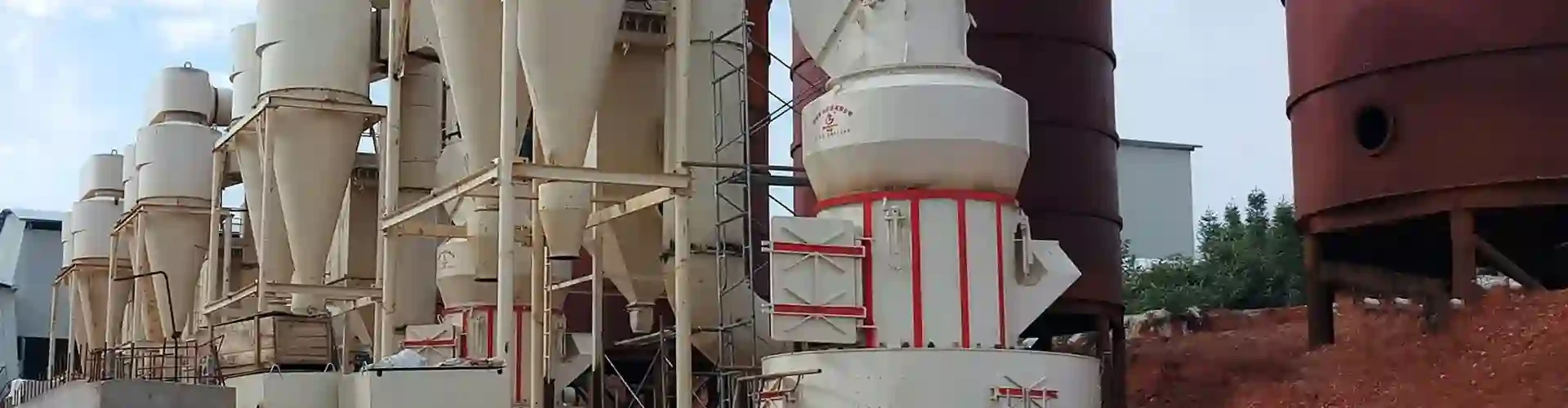
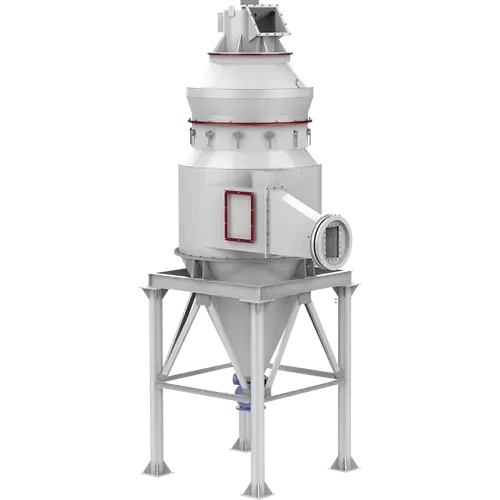
Air Classifier
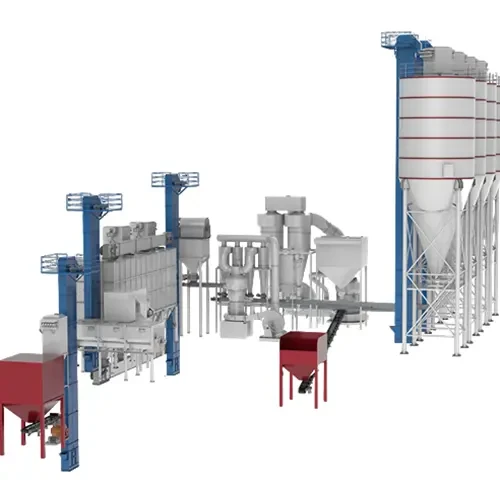
Function Description:Air classifiers separate coarse and fine particles via high-speed rotating classification wheels. Equipped with a secondary air elutriation structure to reduce fine powder entrainment, they deliver finished powder with narrow particle size distribution and are often combined with ball mills to form closed-circuit classification production lines.
Suitable Materials:Limestone, potash feldspar, quartz sand, barite, calcite, etc.
Air Classifier Introduction
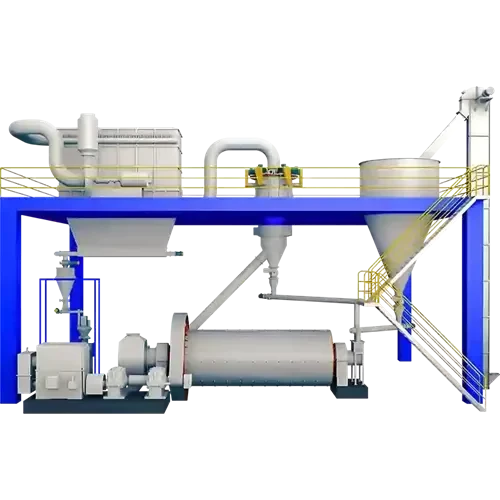
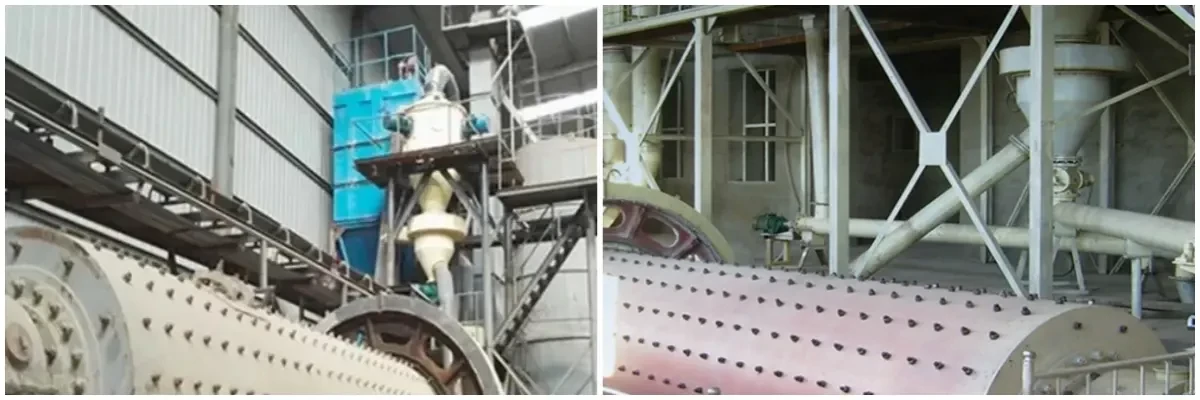
The air classifier, full name turbine air classifier, is dry fine powder separation equipment. It completes particle classification by centrifugal force and airflow drag force, dividing powder into fine finished product and coarse powder return material. It is suitable for powder processing in many fields such as non-metallic minerals, building materials, chemical industry and new materials. The equipment can form a closed-circuit ball milling and classification production line with ball mills, replacing the traditional open-circuit ball milling process. It performs accurate particle size classification and particle size optimization on ground powder, effectively narrowing the powder particle size distribution, optimizing particle gradation, improving finished product quality and overall line production efficiency. It easily solves the problems of high energy consumption, low efficiency and uneven powder particle size distribution of traditional ball mills.
Air Classifier Features & Advantages
Precise and Controllable: Particle separation is realized through precise balance between centrifugal force and airflow drag force with accurate particle size cut point. The finished powder has concentrated particle size distribution (such as D97), which can effectively control oversize particles and reduce unnecessary fine powder entrainment.
Energy Saving and Consumption Reduction: After forming a closed-circuit production line with the ball mill, qualified fine powder is separated and discharged in a timely manner while coarse powder is returned for regrinding. It effectively avoids over-grinding, significantly reduces unit energy consumption and increases the overall line output by 15%~25%.
Wear-resistant Design: Key components such as classification turbines are made of wear-resistant materials. Wear-resistant ceramics or high-chromium alloy materials can be optionally selected according to customer working conditions. The equipment features long service life, stable and reliable operation.
Strong Adaptability: Featuring simple structure, the equipment can be directly connected with grinding equipment such as ball mills without major modification of the original process. It requires low project investment and delivers quick returns. The transformation cost can be recovered in a short time through output increase and consumption reduction.
Working Principle of Air Classifier
Driven by negative pressure suction of the induced draft fan, materials enter the classification zone of the classifier along with airflow. The high-speed rotating classification wheel generates centrifugal force, and particles are separated under the dual effects of centrifugal force and airflow drag force. Qualified fine particles are dominated by airflow drag force, pass through gaps between classification wheel blades and enter the collection system. Coarse particles dominated by centrifugal force are thrown toward the cylinder wall and fall down. After secondary air elutriation, fine powder wrapped in coarse powder agglomerates is blown back to the classification zone for re-separation. Coarse powder is discharged from the bottom and returned to the main grinding machine for regrinding.
The finished cut particle size can be precisely controlled by adjusting the rotating speed of classification wheel and system air volume to meet production requirements of various fineness. If you need supporting ball milling and classification production lines, please provide material parameters, existing ball mill model, capacity and fineness indicators. Our engineering and technical personnel will customize a matching solution for you to ensure optimal operation matching between the classification system and ball mill.
Application Scenarios of Air Classifier
Air Classifier Technical Parameters
| Air Classifier Parameter Table | ||||
| Model | Finished Fineness (μm) | Capacity (t/h) | Classification Wheel Power (kW) | Fan Power (kW) |
| QLF-600 | 5~45 | 1~5 | 18.5 | 30 |
| QLF-800 | 3~45 | 3~10 | 37 | 55 |
| QLF-1000 | 2~45 | 6~18 | 55 | 75 |
| QLF-1250 | 1~45 | 10~30 | 75 | 110 |
| * The above data is for reference only. Actual capacity and particle size range vary with materials. Customized transformation schemes can be provided for existing ball milling production lines. | ||||
Frequently Asked Questions about Air Classifier
What are the differences about single-rotor and multi-rotor air classifiers?
Single Rotor: Equipped with one set of classification wheel, featuring simple structure, low equipment cost and convenient commissioning & daily maintenance. Under the same fineness condition, the single machine has limited capacity, suitable for production projects with small material throughput.
Multi Rotor: Multiple classification wheels are arranged in parallel with large effective classification area. Larger throughput can be achieved at the same fineness. The whole machine has compact structure without enlarging the single machine diameter. It is mostly used for high-capacity powder production projects, yet the equipment cost is relatively higher, with strict requirements for flow field, sealing and dynamic balance of the whole machine.
Is the multi-stage series process of air classifier about multi-rotor structure?
No, they are completely different equipment structures and process solutions. Multi-rotor means multiple classification wheels are arranged in parallel inside one single classifier. All classification wheels run synchronously to increase the single machine capacity, and the whole set of equipment only produces finished powder of one particle size. Multi-stage series means multiple complete classifiers are connected in sequence by pipelines. Materials are separated classifier by classifier. Each classifier can independently adjust rotating speed and air volume, which can separate multiple grades of powder with different specifications at one time and obtain products with narrower particle size distribution. It is suitable for working conditions requiring simultaneous production of various powders, with larger system investment and floor space.
What are the differences about horizontal air classifier and vertical air classifier?
They share the same separation principle, completing powder classification by centrifugal force and airflow drag force, and both can be equipped with secondary air elutriation structure. The core difference lies in the installation direction of classification wheels. The vertical classifier has vertically arranged classification wheel axis while the horizontal classifier adopts horizontally arranged axis, resulting in differences in flow field, precision, capacity, maintenance and applicable working conditions.
 Home
 Products
 About
 Call