

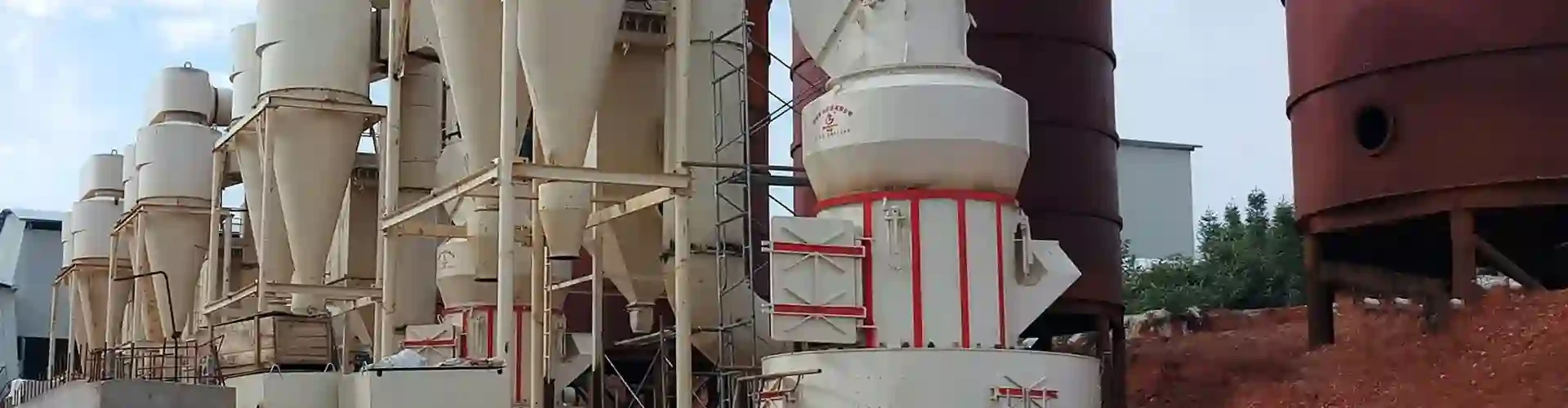
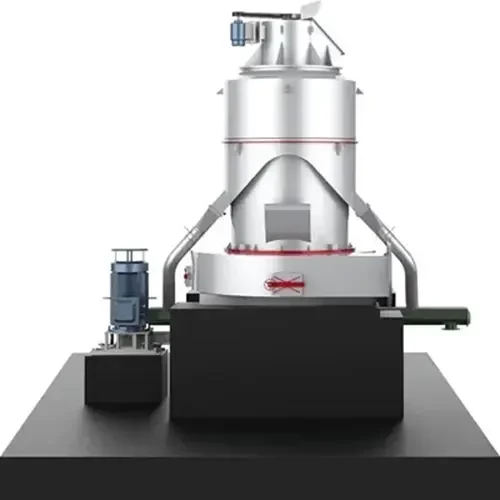
Ultrafine Classifier
Function Description:Ultrafine classifiers adopt high-efficiency centrifugal turbine classification technology, which can stably realize precise separation of 400-2500 mesh ultrafine powder. They are the core equipment for controlling finished fineness and optimizing particle size distribution in ultrafine grinding production lines.
Suitable Materials:Limestone, marble, calcite, barite, dolomite, phosphate rock, potash feldspar, granite, bentonite, kaolin, bauxite, gypsum, graphite, carbon black, etc.
Ultrafine Classifier Introduction
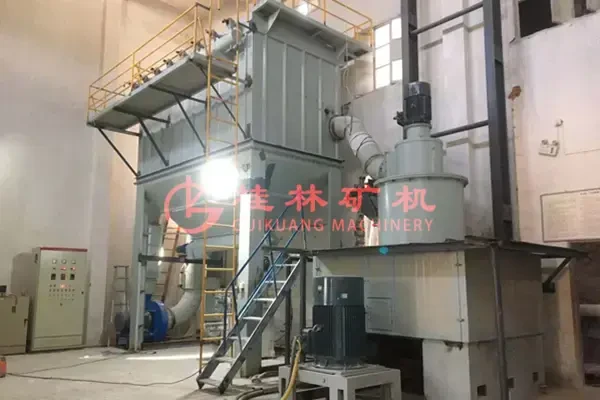
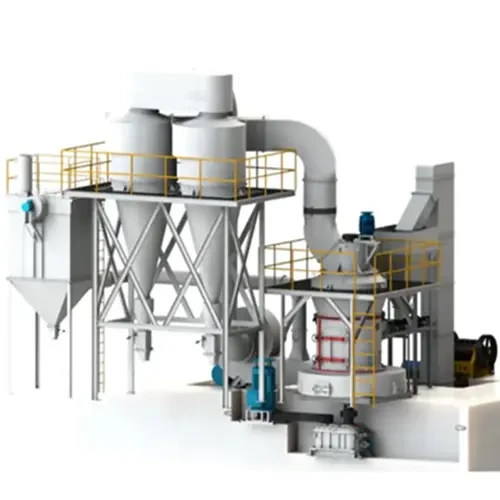
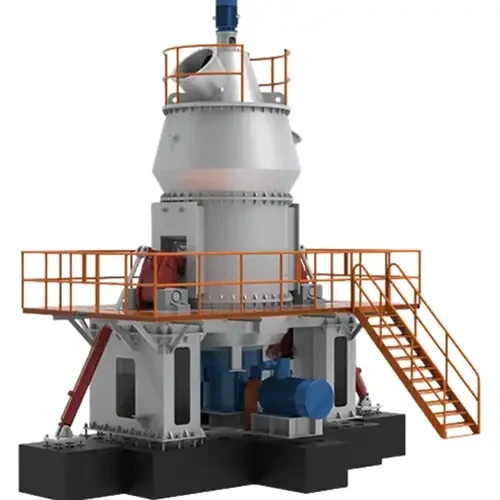
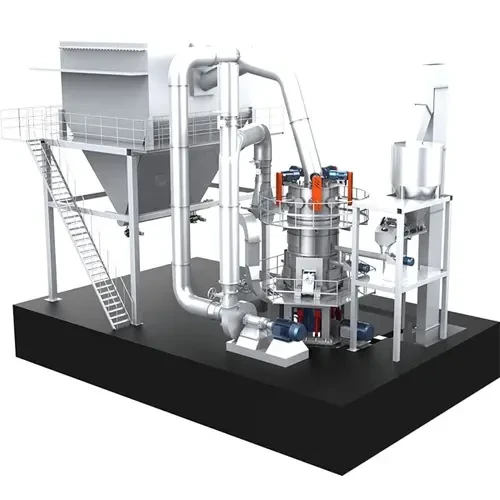
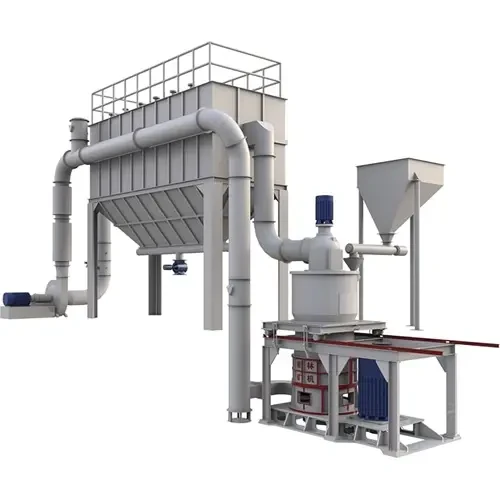
As a high-precision classification system matched with ultrafine ring roller mills, ultrafine vertical mills and other ultrafine powder processing equipment, the ultrafine classifier adopts high-efficiency centrifugal turbine classification technology. It can stably complete precise separation of 400~2500 mesh ultrafine powder and serves as the core equipment for controlling finished fineness and optimizing particle size distribution in ultrafine grinding production lines. The working conditions of the two types of grinding main machines are different, so the model and structure of the matched ultrafine classifier also differ. The ultrafine ring roller mill is equipped with an external classification system, while the ultrafine vertical mill adopts a built-in dynamic-static combined classification system. Both solutions can be flexibly configured with single-head or multi-head structures and support primary and secondary classification processes. They are widely suitable for ultrafine processing scenarios of non-metallic minerals such as limestone, calcite, marble, kaolin, talc, as well as chemical powders.
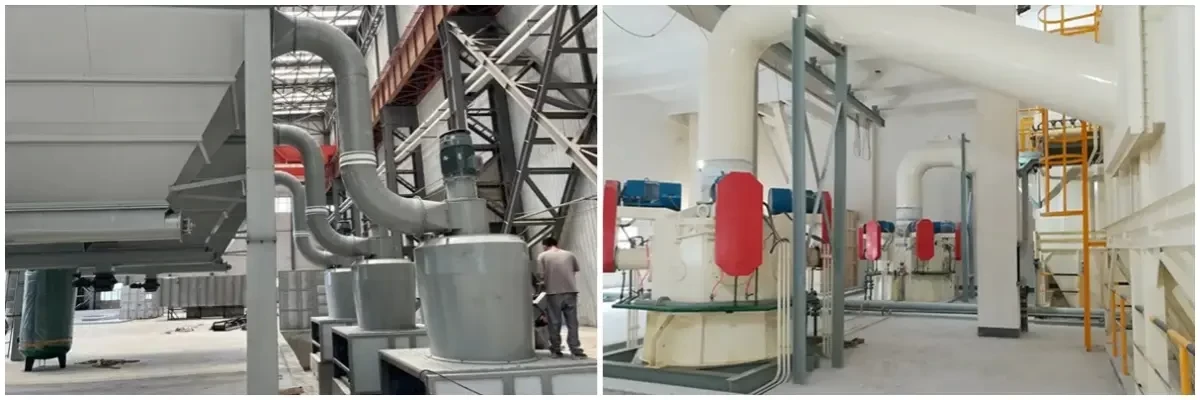
Ultrafine Classifier Features & Advantages
Precise Classification: The equipment adopts high-speed centrifugal turbine classification technology with high classification accuracy and uniform particle size distribution. The finished fineness can be precisely adjusted within the range of 400~2500 mesh, and the D97 particle size can reach below 2μm, fully meeting the high-quality production requirements of various high-end ultrafine powders.
Strong Adaptability: Interfaces and flow fields are customized respectively for ultrafine ring roller mills and ultrafine vertical mills. The special model for ultrafine ring roller mill is of external structure, flanged to the main machine air duct for flexible installation. The special model for ultrafine vertical mill adopts built-in integrated structure, matching the annular air duct and diffusion chamber of vertical mill. It is highly integrated with the grinding system without additional complex pipelines.
Flexible Configuration: The classification structure can flexibly choose single-head turbine or parallel multi-head turbine schemes to balance precision and capacity. In terms of technology, it supports multiple modes including primary classification, secondary series classification and pre-classification. The configuration can be customized according to finished fineness and capacity requirements, suitable for ultrafine powder production from small and medium scale to large-scale industrialization.
Energy Saving and Stable Operation: It forms a closed-circuit production system with the grinding host. Qualified fine powder is discharged in a timely manner and coarse powder is automatically returned for regrinding, which effectively avoids over-grinding and reduces system energy consumption. Key components can be made of wear-resistant ceramic materials to reduce metal contamination. Equipped with frequency conversion control system, the rotating speed can be precisely adjusted and finished fineness can be switched conveniently.
Working Principle of Ultrafine Classifier
When matched with the ultrafine ring roller mill, the ground powder rises with the system airflow and enters the external turbine classification chamber. The high-speed rotating classification turbine forms a stable strong centrifugal force field. Powder particles realize precise separation under the dual effects of centrifugal inertia force and airflow drag force. Qualified ultrafine particles pass through the gaps between classification wheel blades and enter the finished product collection system with negative pressure airflow. Unqualified coarse particles are thrown toward the cylinder wall by centrifugal force and fall back to the grinding chamber for regrinding.
When matched with the ultrafine vertical mill, materials enter the built-in dynamic-static combined classification zone at the top of the equipment along with upward airflow. The powder is first rectified by fixed guide vanes to form a uniform and stable vortex flow field, and then enters the high-speed dynamic turbine area for fine classification.
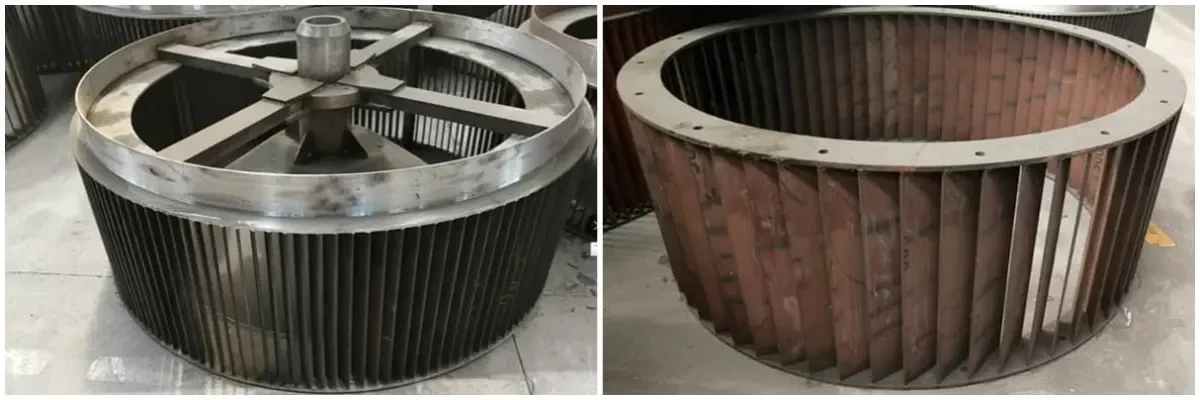
For the production demand of high-end ultrafine powder (above 1250 mesh), a secondary classification system can be configured. The primary stage completes pre-separation of materials to reduce the load of the secondary stage, and the secondary stage carries out deep fine classification, which effectively narrows the particle size distribution and improves powder purity. The vertical mill can also adopt a dual-turbine integrated structure to produce two kinds of high-quality ultrafine powder with different fineness synchronously by one machine for stronger production flexibility.
Application Scenarios of Ultrafine Classifier
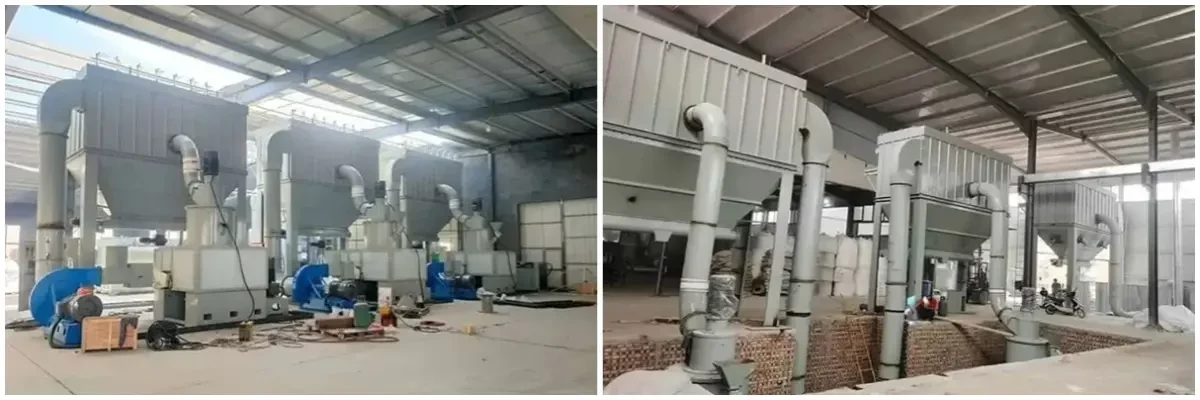
Ultrafine Classifier Technical Parameters
| Parameter Table of Ultrafine Classifier Matched with Ultrafine Ring Roller Mill | ||||
| Matched Host Model | Finished Fineness | Capacity (kg/h) | Classification Structure | Classification Power (kW) |
| GKHGM1000X | 400~2500 mesh | 600~2800 | Single-head / Multi-head | 15~22 |
| GKHGM2000X | 1000~4500 | Single-head / Multi-head | 22~37 | |
| GKHGM3000X | 1100~7000 | Multi-head | 37~55 | |
| * The above are reference parameters for conventional non-metallic mineral processing. Actual capacity and fineness vary with material hardness, density and feed particle size. | ||||
| Parameter Table of Ultrafine Classifier Matched with Ultrafine Vertical Mill | ||||
| Matched Host Model | Finished Fineness | Capacity (t/h) | Classification Structure | Classification Power (kW) |
| GKLM1200X | 400~2500 mesh | 3.8~12 | Single-head / Multi-head | 15~22 |
| GKLM1400X | 6.0~16 | Single-head / Multi-head | 22~37 | |
| * The above are reference parameters for conventional non-metallic mineral processing. Actual capacity and fineness vary with material hardness, density and feed particle size. | ||||
Frequently Asked Questions about Ultrafine Classifier
Are ultrafine classifiers for ultrafine ring roller mills and ultrafine vertical mills interchangeable?
They cannot be used interchangeably. Their interface dimensions, flow field design and classification structures do not match. The classifier for ultrafine ring roller mill is an independent external structure adapted to vertically rising airflow. The classifier for ultrafine vertical mill adopts built-in dynamic-static combined structure, adapted to the compound flow field of annular horizontal air intake plus vertical upward airflow. Forced mixing will lead to reduced classification accuracy, serious coarse particle leakage and failure to meet capacity requirements. Model selection must be targeted according to the matched grinding main machine.
Is it about whether Raymond mill can be equipped with an ultrafine classifier?
Yes. External ultrafine turbine classifier can be adopted for back-end closed-circuit secondary classification transformation. After being ground by the Raymond mill, powder is sent to the external classification chamber for separation with negative pressure airflow. Qualified fine powder enters the collection system, and coarse powder is sent back to the grinding chamber through the return pipeline for regrinding. However, limited by the grinding mechanism of Raymond mill, the stable production range of this scheme is 400~600 mesh. The output will be severely limited when producing ultrafine powder above 600 mesh.
What are the rules about choosing single-head and multi-head structures for ultrafine classifiers?
Single-head Ultrafine Classifier: Equipped with a single classification wheel, it features simple structure and low cost, suitable for small and medium capacity and conventional ultrafine powder production. It matches small ultrafine ring roller mills and Raymond mill technical renovation projects.
Multi-head Ultrafine Classifier: It adopts multiple classification wheels in parallel, delivering larger capacity and more precise particle size control. It is suitable for large-scale mass production and high-end powder projects, mostly matched with large ultrafine ring roller mills and ultrafine vertical mills.
 Home
 Products
 About
 Call