

Detailed Working Principle of Vertical Grinding Mill
- Time:2026-11-23
- Views:1
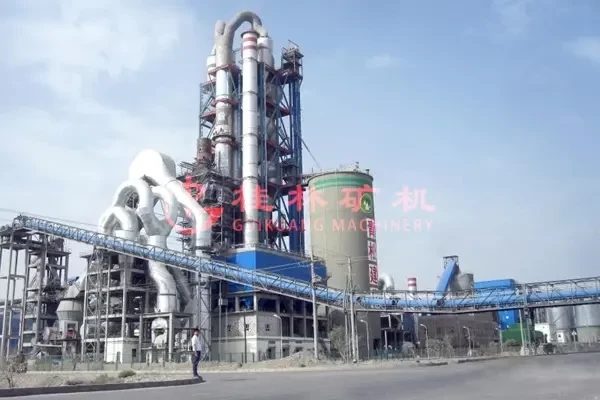
The vertical grinding mill integrates crushing, drying, grinding, classification and conveying. It adopts the material bed grinding principle. During operation, the hydraulic system drives the grinding rollers to shear and compress materials, and the grinding rollers do not make direct contact with the grinding table.
Structure of Vertical Grinding Mill
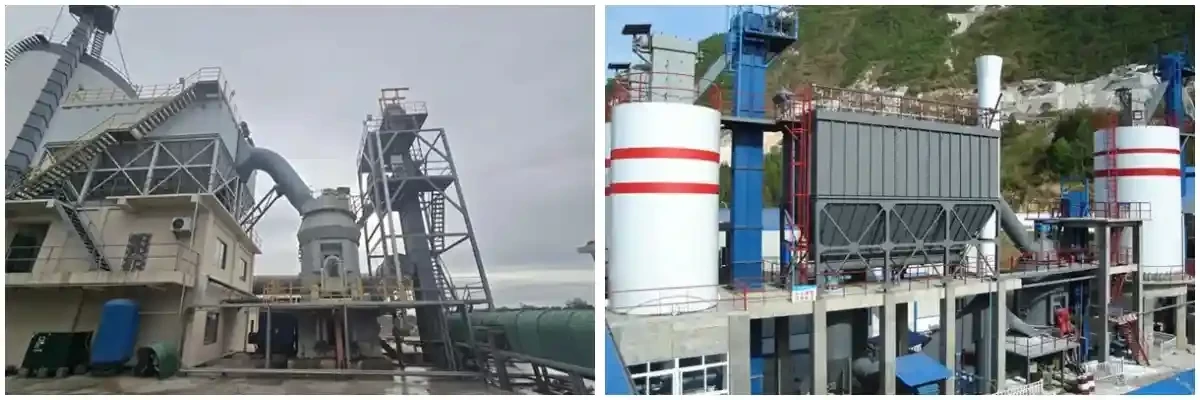
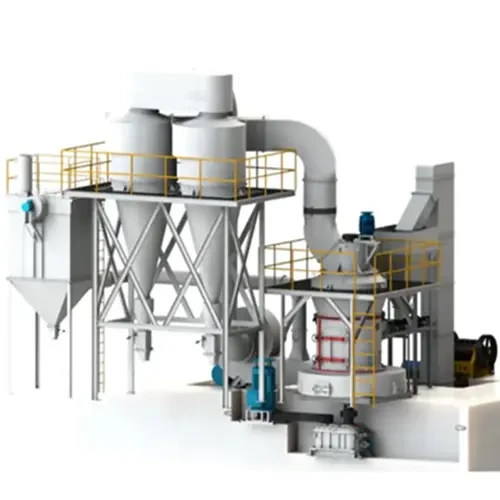
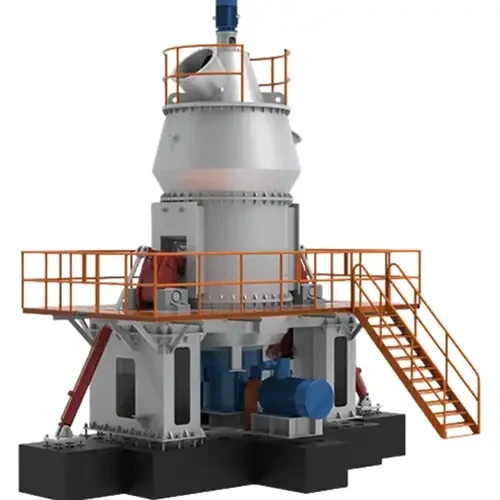
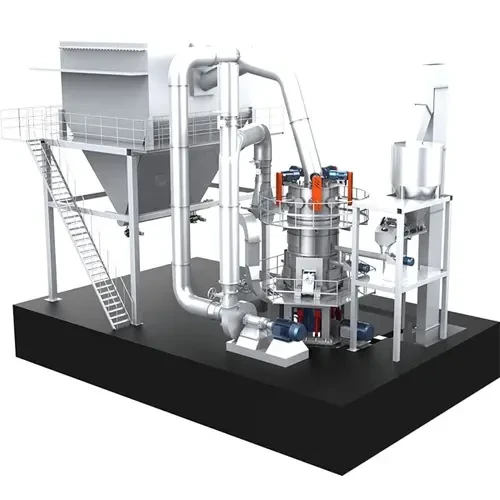
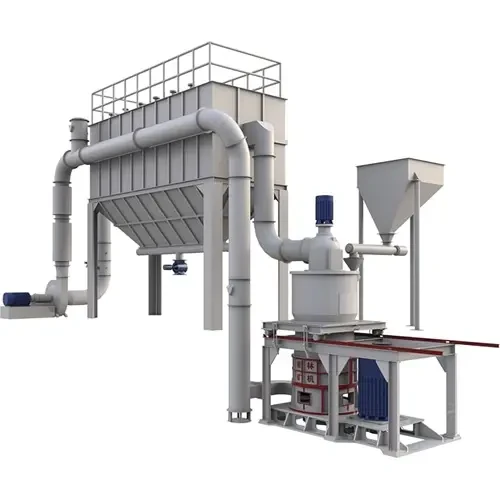
Vertical grinding mill, also known as vertical roller mill (VRM), integrates crushing, drying, grinding, classification and conveying into one high-efficiency integrated grinding unit. It is widely used in large-scale industrial powder preparation such as cement raw meal production, slag powder processing, coal powder preparation and deep processing of non-metallic minerals. The complete set of equipment consists of five core systems:
Grinding System
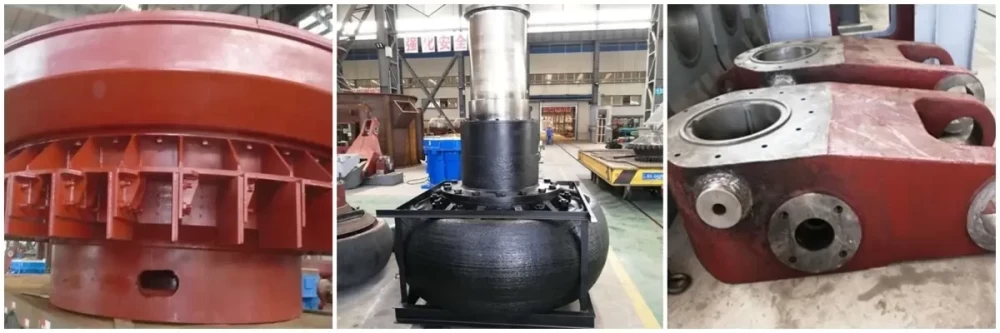
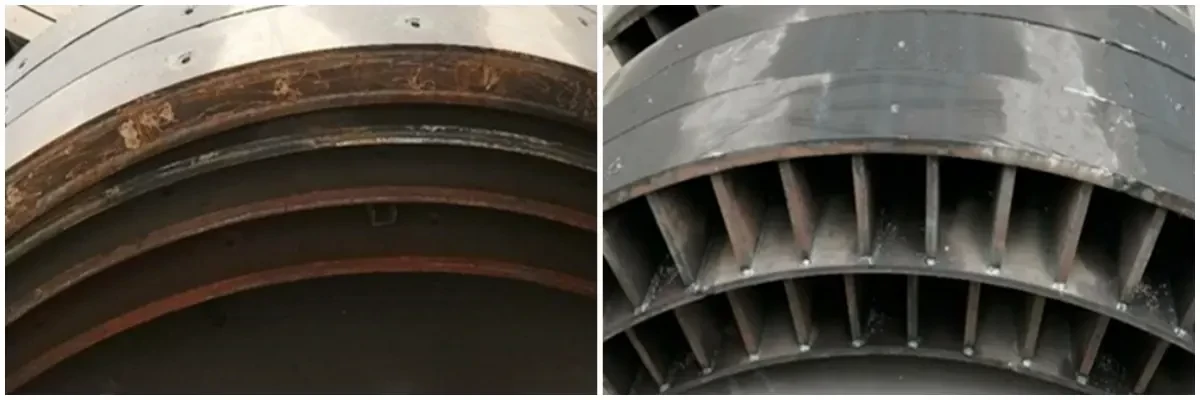
The grinding system mainly includes grinding table and grinding rollers. The grinding rollers are suspended above the grinding table by rocker arms, and apply grinding pressure on the material bed through the hydraulic pressure system. The grinding table is equipped with an annular grinding raceway and a retaining ring on the outer edge to control the thickness of the material bed. If the material bed is too thin, the grinding rollers will strike the grinding table and cause severe vibration of the whole machine. If the material bed is too thick, the grinding force cannot penetrate the bottom material, and the grinding efficiency will drop sharply. During normal operation, the grinding rollers do not directly contact the grinding table liner, and a material bed exists between them, which greatly reduces wear of metal parts.
Hydraulic System
The hydraulic system is composed of hydraulic station, hydraulic cylinders and accumulators. It can provide vertical grinding pressure of 10~30 MPa for the grinding rollers, and the pressure can be adjusted flexibly according to material hardness and finished fineness. The accumulator has dual functions of energy storage and buffering: it maintains stable grinding pressure under normal working conditions. When iron blocks, hard quartz or other impurities pass through the material bed, it can release pressure instantly and lift the grinding roller to avoid equipment vibration and liner damage caused by rigid impact.
Classification System
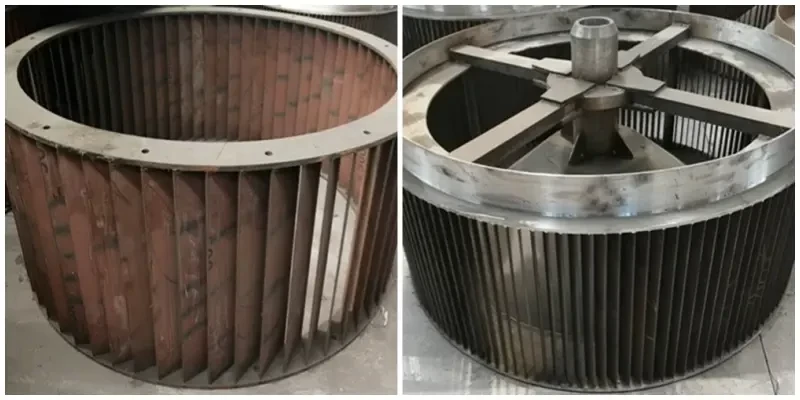
The classification system adopts a static-dynamic combined turbine classifier installed on the top of the mill, which consists of fixed guide vanes and a dynamic rotating rotor. Fixed guide vanes regularize the airflow direction to form a stable and uniform rotating flow field. The high-speed rotor screens materials precisely by centrifugal force. Adjusting the rotating speed of the rotor can flexibly control the finished fineness and ensure uniform particle size and stable quality of final powder.
Air Circuit System
The air circuit system centers on the air ring (nozzle ring) at the lower part of the mill. High-speed hot air enters the grinding chamber here, realizing three functions simultaneously: material pneumatic conveying, material drying and gravity classification. The bottom of the mill is fitted with scrapers and slag discharge structure to discharge heavy particles, hard-to-grind materials and mechanical impurities that cannot be lifted by airflow. Cooperating with the main exhaust fan at the tail, the whole air circuit forms a closed negative pressure environment to provide stable power for suspended material conveying and air circulation inside the mill.
Auxiliary System
The auxiliary system includes grinding roller sealing air system, internal water spraying device and lubrication system. The grinding roller sealing air continuously feeds high-pressure cold air into the bearing cavity to maintain positive pressure inside the cavity, preventing high-concentration dust inside the mill from entering and avoiding oil seal wear and bearing burnout. Under normal working conditions, the sealing air pressure shall be more than 0.3 MPa higher than the negative pressure of the grinding chamber. The internal water spraying device can adjust the viscosity of the material bed and reduce the temperature of the grinding chamber. It is suitable for grinding hard and loose materials, stabilizing the material bed and restraining equipment vibration effectively.
Material Bed Grinding Principle of Vertical Grinding Mill
The essential difference between vertical grinding mill and traditional ball mill lies in the adoption of material bed extrusion crushing principle instead of impact crushing mechanism of ball mill. Materials are subjected to three acting forces in a stable material bed, bringing higher crushing efficiency and lower energy consumption:
Vertical Extrusion Crushing
The grinding roller applies high pressure vertically on the material bed through the hydraulic system, expanding internal cracks of bulk materials under compressive stress to produce brittle fracture and complete primary crushing. This is the main energy source for coarse crushing and directly determines the processing capacity of the unit.
Shear Grinding
The rotating grinding table drives the material bed to move together, and the grinding rollers rotate by friction from materials. There is a fixed difference in linear speed at the contact line between them, which generates continuous shear and grinding action on particles in the material bed, smoothing particle edges and further reducing particle size. Higher grinding pressure brings stronger shear and grinding effect, and finer finished powder is easier to obtain.
Inter-particle Grinding Effect
Particles in the stable material bed are closely packed. Under grinding pressure, they squeeze, rub and collide with each other to produce inter-particle crushing. Fine particles fill gaps between coarse particles, acting as buffer layers to avoid direct contact of metal liners and realizing secondary crushing through particle interaction. This is the core reason why the unit power consumption of vertical grinding mill is much lower than that of ball mill.
Simultaneous Drying Principle of Vertical Grinding Mill
Vertical grinding mill can finish drying while grinding, especially suitable for high-moisture materials such as slag, raw coal and gypsum. Hot air enters from the air inlet at the lower part of the grinding chamber, accelerates through the air ring and contacts materials in counter flow. The drying process is divided into three stages:
1. The material bed on the grinding table is heated and surface moisture evaporates initially.
2. Materials are lifted by airflow and suspended. The surface area of particles increases greatly, and intense heat exchange with hot air achieves high-efficiency drying.
3. In the upper powder classification area, residual heat of airflow carries out secondary dehydration for fine particles.
By controlling the inlet hot air temperature (usually 200~350℃), the moisture content of finished powder can be stably controlled at 0.5%~1.5%. Materials with moisture content ≤15% can be processed directly without separate pre-drying equipment.
Note: For flammable and explosive working conditions such as coal powder preparation, inlet and outlet air temperatures must be strictly controlled to prevent spontaneous combustion risks.
Working Flow of Vertical Grinding Mill
Feeding and Material Spreading
Materials fall into the center of the rotating grinding table through an air-lock feeder from the side or top inlet of the mill. Under centrifugal force, they spread radially toward the edge of the grinding table and gradually form a continuous material bed with uniform thickness, then enter the grinding zone under the grinding rollers. The air-lock feeder isolates the pressure difference between inside and outside the grinding chamber, preventing hot air and dust from escaping through the feeding port and stabilizing negative pressure inside the mill as well as reducing heat loss.
Grinding and Drying
As the grinding table rotates, materials pass through the raceway directly below the grinding rollers. Under high pressure, extrusion crushing, shear grinding and inter-particle grinding take place in sequence. After continuous rolling by multiple groups of grinding rollers, particle size is gradually reduced. Meanwhile, high-temperature hot air fed into the lower grinding chamber continuously washes the material bed on the grinding table, heating piled materials and evaporating free surface moisture initially.
The ground materials keep moving toward the edge of the grinding table. When reaching the air ring, they are vertically lifted by high-speed upward hot airflow at 20~30 m/s. This stage is the core drying section of the whole mill. Materials are dispersed and suspended, fully contacting with high-temperature hot air for large-area heat exchange to evaporate internal moisture quickly and realize deep dehydration.
Gravity primary classification is completed at the same time: particles with larger size and density settle faster than the upward airflow, fall back to the grinding table for re-grinding. Medium and fine particles move upward with hot air and enter the upper classification zone.
Classification and Collection
The airflow carrying dried materials enters the classifier and forms a stable rotating flow field after passing fixed guide vanes. The high-speed rotating rotor generates strong centrifugal force for precise classification. Residual heat of hot air continues to act on suspended fine particles for secondary auxiliary drying to guarantee qualified and uniform moisture of finished powder. Coarse particles are thrown to the shell wall under centrifugal force, lose speed and fall back to the center of the grinding table through the cone hopper, mixing with new feed materials for re-grinding. Qualified fine powder passes through gaps between rotor blades, exits the mill with airflow from the air outlet and goes to the subsequent dust collection system for collection and purification.
 Home
 Products
 About
 Call