

Technical Analysis of Cast Steel and Forging Processes for Raymond Mill Shovel Holder
- Time:2026-11-23
- Views:2
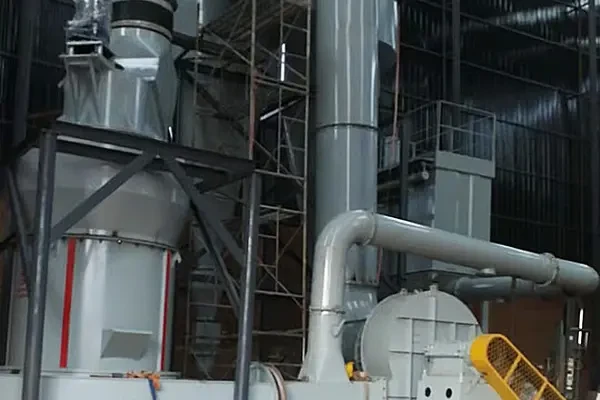
The Raymond mill shovel holder secures blades and feeds material into the grinding chamber. Cast steel versions boast good forming, even stress distribution and proven fit. Forged holders have higher theoretical density but often require welded patches for complex shapes. Both have advantages and drawbacks. Selection depends on component structure, working conditions and fabrication quality.
Function of Raymond Mill Shovel Holder
The shovel holder serves two core roles inside a Raymond mill: securing the shovel blade and feeding bulk material into the grinding zone during rotation. It endures repeated impact loads, torsional stress and continuous reaction force from raw materials. Its structural integrity, critical angular geometry and precision fit with the shovel spindle directly determine reliable operation. A deformed or broken shovel holder will accelerate shovel blade wear at minimum, and trigger serious breakdowns of the whole grinding unit in severe cases.
Traditional shovel holders are mostly cast steel components produced via one-piece casting, while some manufacturers opt for forging. Neither process is universally superior. Service life cannot be judged simply by labeling a part as forged or cast. A proper evaluation must factor in component geometry, load characteristics, defect management and machining tolerance.
Casting Process for Cast Steel Raymond Mill Shovel Holder
Cast steel shovel holders start with pattern making per technical drawings, followed by monolithic pouring and finish machining. For parts featuring intricate angles and curved profiles like shovel holders, one-piece casting brings clear benefits: high fidelity to the designed shape and uninterrupted material structure. No extra splicing or patch welding is required for complex contours, which helps preserve the original design fit when assembling onto the shovel spindle.
Defect control remains the main concern for cast steel. Cast microstructures are prone to shrinkage porosity. Uncontrolled voids, blowholes, sand holes and sand inclusions will compromise load capacity. The quality of a cast steel shovel holder therefore depends not only on base material grade, but also on strict control over melting, gating, riser design and heat treatment, plus non-destructive inspection standards for high-stress sections. Well-controlled cast steel shovel holders perform steadily under standard Raymond mill operating conditions; poorly executed casting will lead to premature failure under cyclic impact and torsion.
Cast steel shovel holders have a long field track record on Raymond mills, with well-matched geometry for existing mill assemblies. For shovel holders packed with complex curved surfaces and angled faces, one-piece casting delivers consistent part quality and stable mass production.
Forging Process of Forged Raymond Mill Shovel Holder
Forged shovel holders are cut from steel billets, heated to forging temperature and press-formed. Forging refines grain structure and boosts material density, eliminating porosity and segregation commonly seen in castings. This is the primary metallurgical advantage of forged parts. However, a shovel holder is not a simple solid block. Where hot forging cannot directly form complex angles and curved surfaces, fabricators resort to cold cutting, welded reinforcing patches and post-forging drilling.
Performance now hinges less on the base forged steel and more on weld seams and heat-affected zones. Welded patches introduce residual stress and stress concentration, creating initiation points for fatigue cracks. The shovel holder works under continuous impact and torsional cycling in Raymond mills. Weld zones without adequate stress relief, post-weld heat treatment and weld inspection carry elevated cracking and deformation risks. Many field failures of forged shovel holders that damage blades or shut down mills stem from poorly controlled welded profiles and loose machining tolerances, rather than inherent weaknesses of forged steel.
Besides, angular accuracy and dimensional control of forged components rely heavily on forging tooling, secondary machining and gauge inspection. Misaligned critical angles, offset mating surfaces or poor spindle fit amplify uneven stress during rotation and speed up component failure.
Casting vs Forging for Raymond Mill Shovel Holder: Comparative Analysis
Stress Distribution
In terms of load transfer paths, monolithic cast shovel holders maintain smoother stress flow across complex angles and curved surfaces without extra joining points, suiting cyclic impact and torsional loads. The main risk for cast steel lies in casting defects. When defect screening, heat treatment and dimensional checks are properly implemented, the load path remains predictable and robust.
Forged shovel holders offer superior theoretical density, yet welded patches turn weld lines and adjacent areas into critical weak points. The shovel holder is not a static load block. Fatigue cracking risk cannot be overlooked when welds bear alternating loads. Any shortcuts in welding procedure qualification, stress relief, post-weld heat treatment or weld testing can erase the metallurgical benefits of forging.
Assembly Tolerance
Reliable shovel holder operation depends on geometry, dimensional accuracy and mating fit as much as raw material. Casting excels at replicating intricate shapes, making it easier to retain the designed assembly relationship between shovel holder and shovel spindle. Forging improves steel density, yet sloppy secondary machining and inspection lead to angular errors and bad spindle alignment. Uneven loading during rotation gets magnified rapidly.
Suitable process selection should be based on real production quality control: defect acceptance standards for cast steel parts, weld quality and stress relief routines for fabricated forgings, inspection of critical angular dimensions, fit validation with the shovel spindle, plus proven performance under identical grinding conditions.
Raymond Mill Shovel Holder: Casting or Forging, Which Is Better?
Neither casting nor forging is universally better. For shovel holders with complex curved contours and multi-angle geometry, one-piece casting delivers more predictable forming consistency and assembly compatibility, on condition that casting defects and heat treatment are tightly controlled. Forging shines for simple-shaped shovel holders that can be fully forged in one piece. If complex shapes require welded patches, fabricators must enforce strict weld QC, post-weld stress relief and full dimensional verification before installation.
Key checkpoints for purchasing: match between part complexity and forming method; blowhole, sand inclusion and shrinkage acceptance limits for cast steel; whether forged units contain welded patches and corresponding weld certification; verification of key angles, mating dimensions and spindle fit; plus field service history under similar grinding applications. Stable long-term performance is achieved only when material, geometry, manufacturing quality and assembly tolerance work in harmony.
- Previous Article:Not Available
- Next Article:Detailed Working Principle of Vertical Grinding Mill
 Home
 Products
 About
 Call