

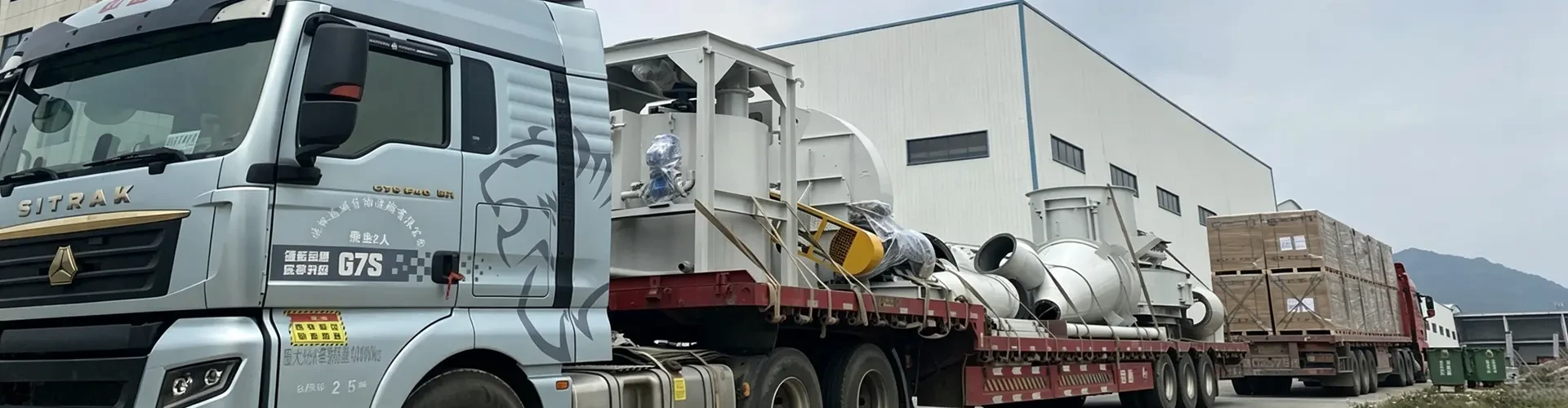
The Importance of Raymond Mills in the Powder Processing Industry
- Time:2026-11-24
- Views:1
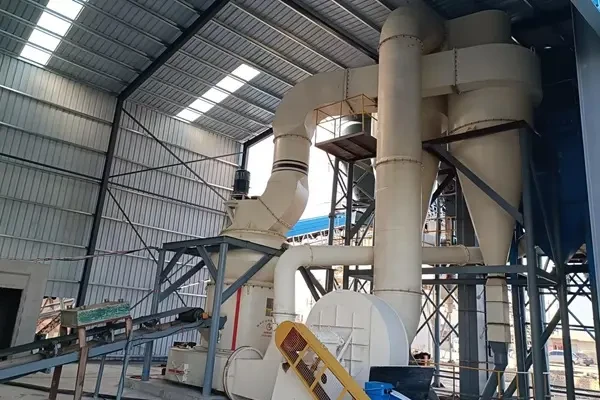
The importance of Raymond mills in the powder processing sector is often underestimated due to the label of "traditional equipment". Drawing on decades of industry experience from Guilin Mining Machinery, this article elaborates from four dimensions: demand structure, economic advantages, process compatibility and technological evolution.
The Importance of Raymond Mill Comes from Demand Structure Rather Than the Equipment Itself
When discussing the importance of Raymond mills, it is easy to fall into comparisons of equipment parameter advantages and disadvantages, but the more fundamental judgment basis lies on the demand side. The powder industry presents a pyramid-shaped demand for fineness: ultra-fine powder (above 400 mesh) sits at the top of the pyramid with high added value yet limited absolute demand volume. Medium-fine powder ranging from 80 to 400 mesh forms the base of the pyramid. Though low in unit value, it is consumed in huge tonnage continuously in building materials, chemical industry, metallurgy, desulfurization, filler and other fields. The global market sales of Raymond mills reached approximately USD 244 million in 2025, estimated at USD 249 million in 2026 and projected to hit USD 282 million by 2032, with a compound annual growth rate of 2.1%. The growth rate stays steady with a stable base. Non-metallic mineral processing accounts for about 55% of downstream demand, and deep processing of high value-added minerals such as calcium carbonate, talcum powder and barite serves as the core driving force. The annual global sales volume of Raymond mills exceeds 10,000 units at an average price of roughly USD 23,000. This scale itself proves that equipment demand for medium-fine powder production is not transitional, but an integral part of daily industrial operation.
The importance of Raymond mills is built exactly on this demand structure. It is not the "best powder grinding equipment", but the equipment that can continuously deliver qualified products at acceptable comprehensive costs within the largest demand range. This conclusion is more accurate than labeling it "irreplaceable" and stands up to engineering verification.
Cost Advantage Determined by the Grinding Principle of Raymond Mill
Powder processing is highly cost-sensitive. Power consumption usually accounts for a large share of operating costs in grinding work. Differences in energy transfer efficiency among various grinding principles directly determine the economic service life of equipment within a specific fineness range.
Ball mills rely on the rotating cylinder to drive steel balls for material impact and grinding. A large amount of energy is wasted on the self-weight of the cylinder, ineffective collisions between steel balls and liner friction. By contrast, Raymond mills use centrifugal force to press grinding rollers against the grinding ring to compress and shear the material bed, forming a much shorter energy transfer path. For medium-fine powder processing below 400 mesh, Raymond mills can cut power consumption by more than 30% compared with ball mills. This gap turns into substantial cost advantages during long-term continuous production. For bulk medium-fine powder products such as limestone desulfurization powder, heavy calcium carbonate fillers and barite weighting agents for drilling, every slight reduction in power consumption expands the marginal profit per ton of finished product.
This economic advantage applies only to a definite range instead of extending infinitely. The compression grinding principle of Raymond mills limits the proportion of ultra-fine particles in finished products: even at 400 mesh, the share of particles smaller than 10 μm is generally only around 30%. Once the target product shifts toward ultra-fine powder, the power consumption per unit output of Raymond mills rises rapidly and its economic advantage fades away. In other words, Raymond mills excel at producing adequately fine powder at low cost, rather than offering low-cost grinding for all fineness grades.
Structural Advantages of Raymond Mill
The value of equipment depends not only on single-unit performance, but also on its integration cost into existing production lines. Another structural advantage of Raymond mills lies in their vertical compact layout and negative-pressure closed-circuit system, which naturally fit a great number of traditional production lines.
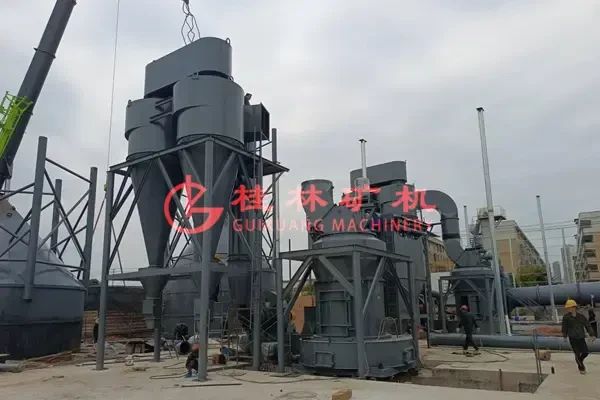
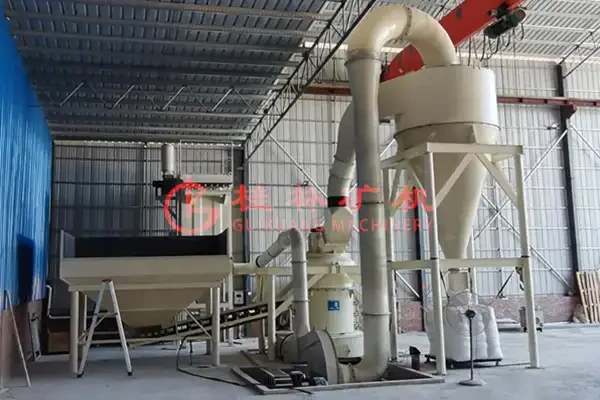
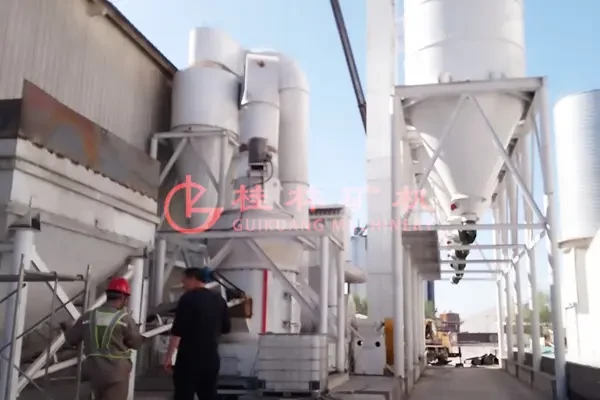
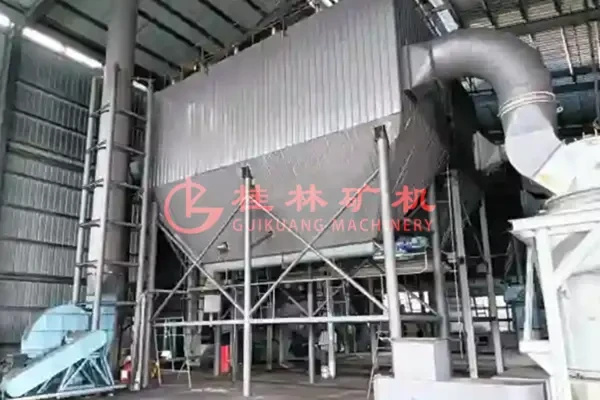
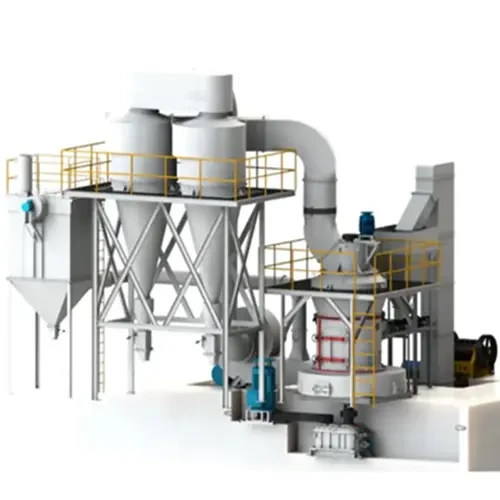
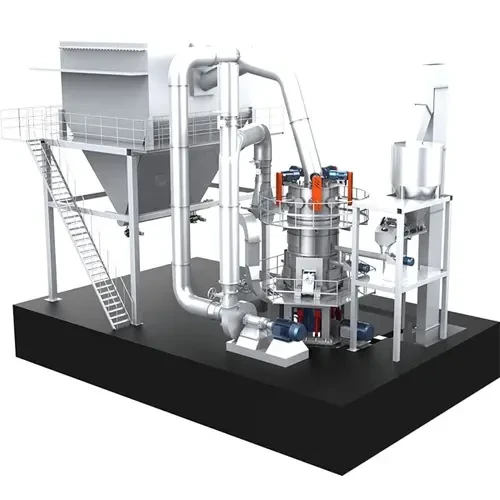
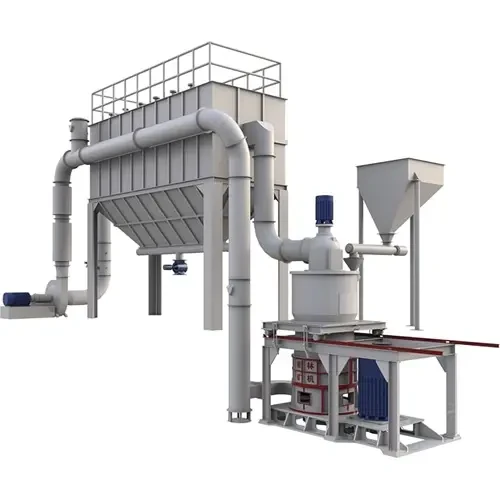
Raymond mills adopt vertical arrangement. The whole system including main mill, classifier, fan, pipelines, cyclone collector and pulse dust collector can be integrated within a relatively small footprint. Centralized electric control lowers labor requirements. For small and medium-sized non-metallic mineral processing plants, building material powder workshops and desulfurizer preparation stations widely distributed across regions, this means lower civil engineering investment, shorter installation cycles and simpler maintenance management. Ball mills inherently require larger horizontal space, heavier foundation works and more complex transmission maintenance systems. Such expenses can be diluted under high-capacity scenarios, yet become uneconomical burdens for medium and small production capacity.
Viewed from downstream distribution, Raymond mills cover the most routine links in powder processing: limestone powder as desulfurizer for coal-fired power plants, barite powder as weighting agent for petroleum drilling fluid, calcium carbonate powder as filler for rubber, plastics and coatings, gypsum powder for building materials and soil improvement, bentonite for casting, drilling and feed carriers. Most of these applications require fineness between 80–325 mesh, with core demands for continuous stable operation, low downtime and easy maintenance, instead of extreme fineness or full automation. The good process compatibility of Raymond mills in these scenarios cannot be replicated quickly by new ultra-fine mills and large vertical mills at the same cost level.
Technical Iteration of Raymond Mill
Defining the positioning of Raymond mills as suitable for medium-fine powder does not mean it is a frozen technical relic from the last century. On the contrary, its sustained popularity partly benefits from its clear boundary: it does not attempt to compete with new equipment in all performance dimensions, but carries out targeted technical upgrades within its advantageous range.
Upscaling is the most obvious trend in recent years. Single-unit specifications keep upgrading, and 5R & 6R models have gradually become common options for medium and large powder production projects. The integrated base reduces alignment errors and operating vibration during installation, improving the running stability of large models. While retaining the economic edge for medium-fine powder, these models lift the overall system output. In terms of intelligence, the popularization of PLC and frequency conversion technology enables real-time adjustment of grinding roller pressure, classifier speed and feeding rate. Vibration and temperature sensors shift maintenance from passive breakdown repair to early warning. Some industry analyses predict that the proportion of Raymond mills equipped with intelligent monitoring systems will exceed 40% in 2026. Green upgrading is reflected in full negative-pressure operation and pulse dust collection becoming standard configurations for modern models. Systematic improvement of sealing performance and dust removal efficiency allows Raymond mills to operate compliantly amid tightening environmental regulations instead of being phased out by emission standards.
It is worth noting the direction of these upgrades: they do not change the grinding principle of Raymond mills, nor try to transform it into ultra-fine grinding equipment. Instead, they optimize output, stability, controllability and cleanness within its medium-fine powder positioning. This strategy of upgrading within its own boundary extends the technical lifecycle of the equipment.
Raymond Mill Is Important but Not Boundless
To recognize the importance of Raymond mills, we must also recognize its conditional applicability. Otherwise, the statement of "importance" will turn into misleading selection suggestions.
In terms of material hardness, Mohs hardness 7 is a reliable engineering boundary. Once exceeding this threshold, the wear rate of grinding rollers and grinding rings rises sharply. Frequent replacement of wear parts and downtime losses will erode its original operation and maintenance cost advantages. Some special models on the market claim to handle materials below Mohs 9.5, which is an extended capacity of customized design and shall not be taken as the general selection reference. The conventional moisture limit for stable operation is within 6%. Materials with higher moisture need hot air systems designed in the process stage rather than treated as the default capability of the equipment itself. For fineness, 80~400 mesh is the economic range for standard models. Beyond 400 mesh, output reduction and accelerated wear will greatly weaken its cost advantage. Blind pursuit of finer finished products usually leads to poor returns.
Operation and maintenance requirements cannot be ignored. Grinding rollers and grinding rings are the most heavily worn components. Industry practice suggests replacement when the thickness wears down to two-thirds of the original size. The bearings of grinding roller assemblies shall be cleaned and inspected after more than 500 working hours. For limestone processing, the inspection cycle for rollers and rings is usually 500~800 hours. Typical causes of output drop include wear of rollers and rings, drifting classifier speed and unstable feed particle size. If finished powder becomes coarser, priority checks should focus on wear parts and classifier rotating speed. The "simplicity" of Raymond mills refers to convenient operation of the whole system, rather than omitting wear part management.
In summary, the importance of Raymond mills in the powder processing industry should not be described as an "irreplaceable old device", but as a result of structural matching. Its importance has clear applicable conditions: 80~400 mesh, Mohs hardness below 7, moisture content within 6%, small-to-medium production capacity, and sensitivity to capital and operation costs. Under these conditions, Raymond mill is a well-proven fundamental equipment in the powder processing chain instead of backward capacity waiting to be eliminated. Discussions on its importance without these prerequisites lack engineering rigor, no matter the standpoint. For the powder processing industry, the real issue is not debating whether Raymond mills are "advanced", but identifying accurately in which scenarios they remain the most economical solution.
- Previous Article:Not Available
- Next Article:Technical Analysis of Cast Steel and Forging Processes for Raymond Mill Shovel Holder
 Home
 Products
 About
 Call