


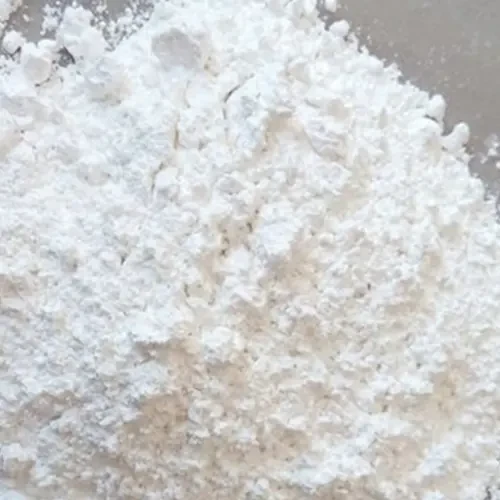
Food Grade Calcium Hydroxide
Powder Purity:95%-99%
Powder Whiteness:90-95
Powder Fineness:325 mesh: sieve passing rate ≥98%
Free Moisture Content:Food processing, sugar refining, fruit juice & beverage formulation, pharmaceutical preparations, fine calcium salt synthesis, drinking water purification, etc.
Food-Grade Calcium Hydroxide Introduction
Food-grade calcium hydroxide is a food additive calcium hydroxide complying with national food safety standards. It has strict requirements for raw material purity and production process. Its harmful impurities such as heavy metals and microbial indicators are extremely low and meet national food safety standards. It is suitable for food processing, pharmaceutical preparation, drinking water purification and other fields.

Properties of Food-Grade Calcium Hydroxide Powder
Chemical Properties: The main content of calcium hydroxide (Ca(OH)₂) ≥95%, high purity, low impurities and extremely low heavy metal content.
Physical Properties: Fine and uniform powder, 325 mesh sieve passing rate ≥98%. The powder is dry, loose and has good flowability.
Appearance & Color: Whiteness usually ranges from 90~95 with uniform color and no black spots.
Moisture Content: Free moisture ≤1.0%, not easy to cake with high stability for long-term storage.
Production Process of Food-Grade Calcium Hydroxide
The production of food-grade calcium hydroxide adopts high-purity quicklime raw material (≥95%, usually calcined in rotary kiln) and lime slaker with two-stage digestion design. Quicklime is preliminarily digested in the double-shaft mixer, followed by secondary digestion in the chain stirring digester to fully react tiny calcium oxide particles with water and eliminate residual corrosive CaO which brings potential safety hazards. A water mist dust collector is equipped to recover heat to promote digestion and capture fine dust, improving raw material utilization rate.
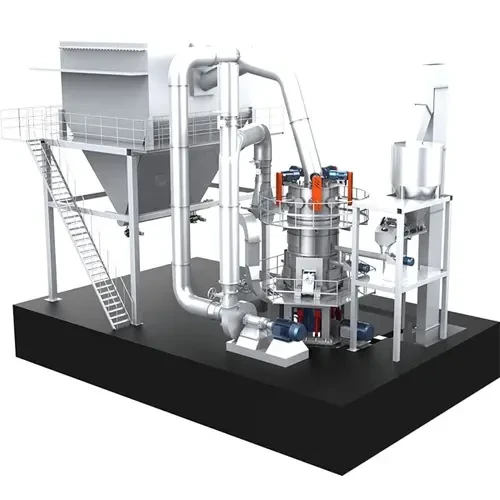
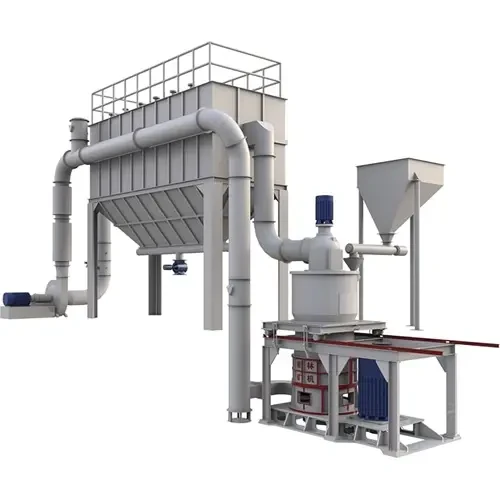
Then the digested calcium hydroxide is classified by calcium hydroxide classifier. Under-reacted coarse powder returns to the lime slaker for secondary digestion, while fully reacted fine powder goes into lime powder mill for dispersion, grinding and classification. Finally, food-grade calcium hydroxide with 325 mesh sieve passing rate ≥98% and high purity ≥95% is produced, fully meeting stringent safety and efficiency requirements of food, pharmaceutical and other industries.

Application Fields of Food-Grade Calcium Hydroxide
Food Additive: As a compliant additive (INS 526), food-grade calcium hydroxide is directly used for pH adjustment of beverages, coagulation of bean products, meat texture improvement and calcium fortification in infant food, performing functions of acidity regulation, coagulation and stabilization.
Nutritional Calcium Source: As a high-purity calcium source, it is used to synthesize safe and efficient organic calcium salts such as calcium lactate and calcium citrate. It is critical for calcium fortification in dietary supplements and functional foods.
Pharmacy & Biology: Applied for pH adjustment of pharmaceutical agents and serves as core calcium source for synthesizing hydroxyapatite (HA), a biomaterial.
Chemical Catalysis: Used as high-purity alkaline catalyst or pH regulator for synthesis of high-value pharmaceutical intermediates and fine chemicals.
Technical Parameters of Food-Grade Calcium Hydroxide
| Parameter Table of Food-Grade Calcium Hydroxide | |
| Calcium Hydroxide [Ca(OH)₂] Content | ≥95.0% |
| Arsenic (As) Content | ≤3.0mg/kg |
| Lead (Pb) Content | ≤5.0mg/kg |
| Fluoride (F) Content | ≤50mg/kg |
| Heavy Metals (as Pb) | ≤10mg/kg |
| Acid-Insoluble Substance Content | ≤0.1% |
| Magnesium & Alkali Metals Content | ≤1.0% |
| Fineness | 325 mesh, sieve passing rate ≥98% |
| Whiteness | 90~95 |
| Free Moisture Content | ≤1.0% |
| * All data above are for reference only. Specific parameters vary with applications. There is no unified standard in the industry. | |
Frequently Asked Questions of Food-Grade Calcium Hydroxide
What are the storage precautions for food-grade calcium hydroxide?
Food-grade calcium hydroxide must be hermetically stored in dry environment. Seal the package immediately after use to prevent deterioration caused by absorption of carbon dioxide and moisture in the air. Keep moisture-proof during storage to avoid caking. Use dedicated tools for material taking to prevent cross-contamination.
How to dissolve and use food-grade calcium hydroxide?
It is usually prepared into lime milk with concentration of 5~10%. Slowly add calcium hydroxide into water under continuous stirring to ensure full dispersion. After preparation, let the solution stand and clarify for about 24 hours, then take the supernatant for use. Note that the solution should be prepared freshly and used within 24 hours to guarantee optimal effect and food safety.
What is the difference between food-grade calcium hydroxide and industrial calcium hydroxide?
Food-grade calcium hydroxide must strictly meet national food safety standards with extremely strict limits on heavy metals, microorganisms and other harmful impurities. Its production must be carried out in environments complying with food hygiene specifications and the finished powder has high purity. Industrial calcium hydroxide has no such requirements with relatively lower powder purity and cost, suitable for industrial production fields.







 Home
 Products
 About
 Call