

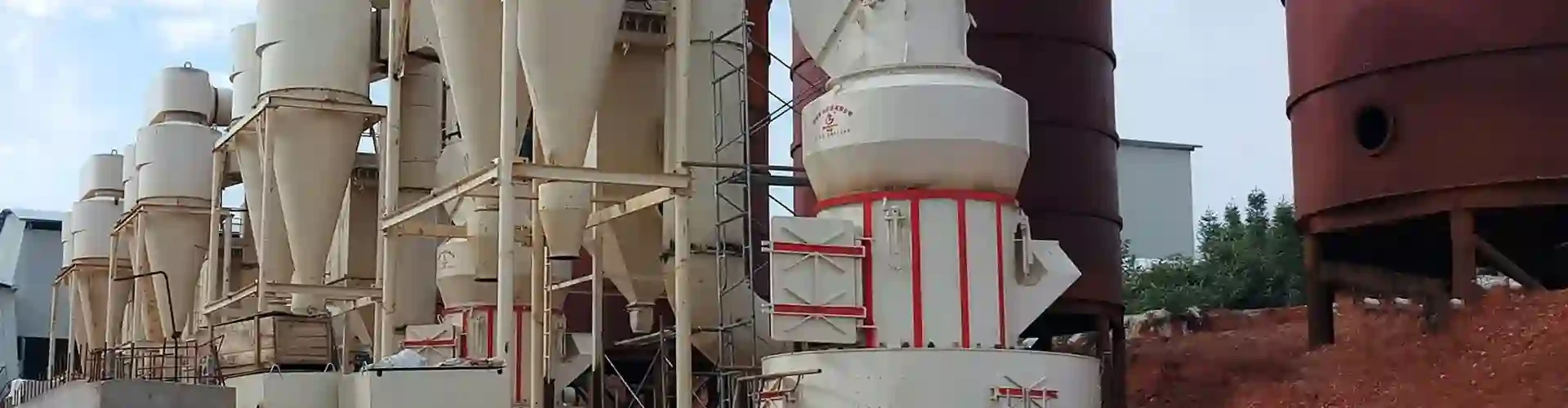
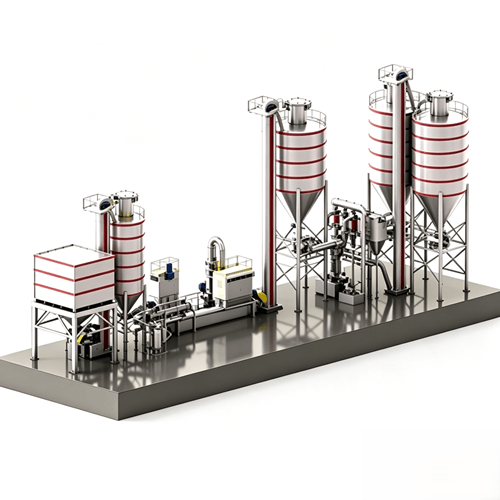
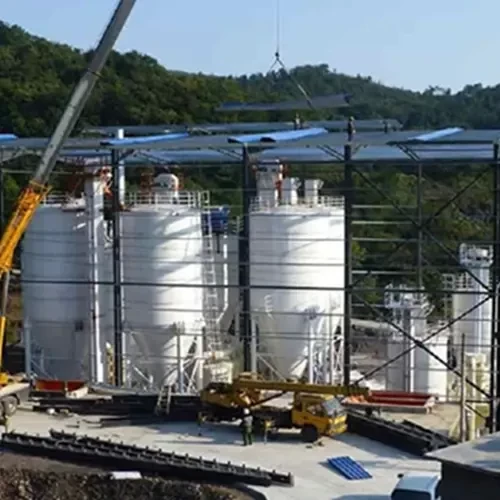
High Specific Surface Area Hydrated Lime Production Line
Function Description:The high specific surface area calcium hydroxide production line adopts a two-stage slaking design. An additive mixing and drying system is added in the slaking process. The fineness is precisely controllable within 200-600 mesh, enabling stable production of high specific surface area calcium hydroxide with a specific surface area above 40 m²/g.
Suitable Materials:Calcium hydroxide (slaked lime or hydrated lime)
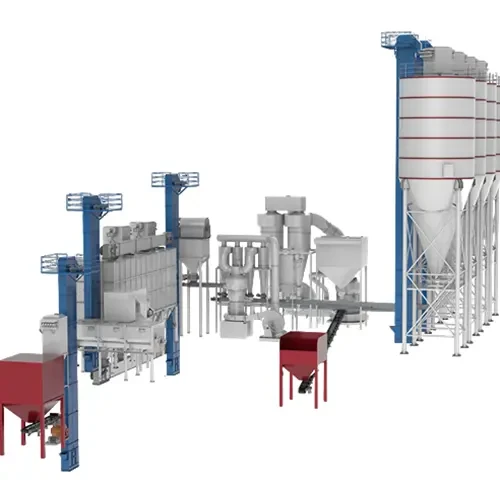
Introduction to High Specific Surface Area Calcium Hydroxide Production Line
High specific surface area calcium hydroxide production line (full name: high BET specific surface area calcium hydroxide production line) is an upgraded process developed by Guilin Mining Machinery to boost the specific surface area of calcium hydroxide on the basis of conventional calcium hydroxide production lines. Compared with ordinary production lines, it optimizes the slaking process, adopts a two-stage slaking system, and adds additive mixing and drying procedures. It can stably produce high-activity calcium hydroxide with specific surface area above 40㎡/g. The finished powder is loose and porous with stable purity and fast reaction rate with flue gas. It is widely used in dry flue gas treatment projects such as waste incineration, hazardous waste disposal, coking and glass furnace. It can directly replace sodium bicarbonate desulfurizer and help enterprises cut flue gas operation and maintenance costs.
Features & Advantages of High Specific Surface Area Calcium Hydroxide Production Line
High Specific Surface Area: Pore-forming by adding additives during slaking, the product maintains stable BET specific surface area above 40m²/g, roughly twice that of products slaked without additives (15–23m²/g). Larger specific surface area provides more reaction sites and stronger adsorption capacity for powder-flue gas contact, greatly improving the efficiency of desulfurization, deacidification and heavy metal removal. Less chemical agent consumption under identical working conditions. It can replace expensive sodium bicarbonate and effectively reduce flue gas treatment costs, suitable for complex and demanding environmental working conditions including waste incineration, hazardous waste kilns, coking and glass furnaces.
Constant-temperature Slaking: The production line adopts 80~90℃ constant-temperature slaking process. By precisely controlling water-lime ratio, reaction temperature and retention time, it solves the problems of overheating and crust formation on particle surface in traditional processes. Mild hydration at constant temperature keeps the powder loose, avoiding incomplete inner reaction, powder inertness and poor reactivity, and guarantees high reactivity of finished products from the production side.
Favorable Pore Structure: The finished powder features abundant, uniform and stable internal micropores with good pore connectivity, no collapse or local densification. Flue gas can penetrate into particles for sufficient reaction, offering large adsorption capacity, fast reaction speed and high reagent utilization rate. It effectively solves common industry problems of insufficient reaction, high residue and unstable emission compliance in dry powder injection desulfurization.
High Slaking Efficiency: The production line adopts a two-stage slaking system with static aging for 8~16 hours to enable sufficient continuous hydration of residual calcium oxide. The overall slaking rate can reach over 98%. It effectively reduces residual calcium and impurities and avoids batch index fluctuation. The finished product contains ≥94% available calcium hydroxide with fine powder free of hard lumps and agglomeration blockage. It has excellent batch stability and meets requirements for high-standard environmental acceptance and fine industrial materials.
Distributed Control: The whole line adopts DCS distributed intelligent control system. Parameters including feeding, water supply, additive dosing, slaking temperature and aging duration are fully linked and controllable. It supports one-key start-stop, fault early warning and automatic data storage. Quality deviation caused by manual proportioning is eliminated. The production line requires fewer operators, has low failure rate, simple operation & maintenance and stable controllable production quality.
Process Flow of High Specific Surface Area Calcium Hydroxide Production Line
Raw Material Handling
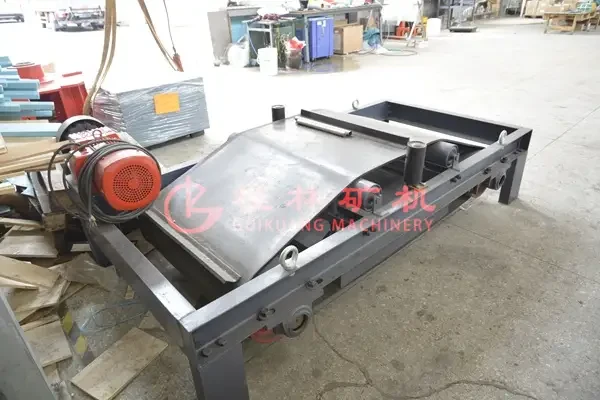
The core raw material for high specific surface area calcium hydroxide production line must be calcined from high-purity limestone. It is recommended that the CaO content of limestone raw material ≥53%. During production, inert impurities such as silica and magnesium oxide are strictly controlled with single impurity ≤1.5%, preventing impurities from covering powder pores, occupying specific surface area and causing insufficient activity or poor whiteness of finished products. After calcination, vibrating screens, magnetic separators and other equipment are used for screening and impurity removal to further guarantee the whiteness and purity of quicklime and final calcium hydroxide powder.
Calcination & Crushing
This production line abandons traditional vertical shaft kiln process. Traditional vertical shaft kiln has low thermal efficiency with prominent underburning and overburning issues, leading to large fluctuation and poor stability of quicklime activity, which fails to meet high-end indicators for high specific surface area calcium hydroxide. Rotary kiln is the preferred calcination equipment for uniform calcination and high temperature control precision. It can effectively reduce underburning and overburning rate of quicklime and produce high-quality CaO with favorable pore structure and stable activity, suitable for large-scale mass production of high specific surface area calcium hydroxide.
New environmentally friendly Maerz kiln is also available. It combines energy-saving advantages of vertical shaft kiln and uniform calcination characteristics of rotary kiln with more economical equipment investment and O&M cost, making it the preferred solution for small & medium-scale high-quality quicklime preparation. It can stably produce qualified quicklime and provide reliable raw material guarantee for downstream high specific surface area calcium hydroxide production.
Quicklime obtained by calcination shall meet strict specifications: available CaO >90%, lime activity ≥380 ml, underburning rate <3%. Raw material quality is strictly controlled from the source to stably guarantee core performances of finished calcium hydroxide, including purity, pore structure and high specific surface area.
Raw Material Pre-grinding
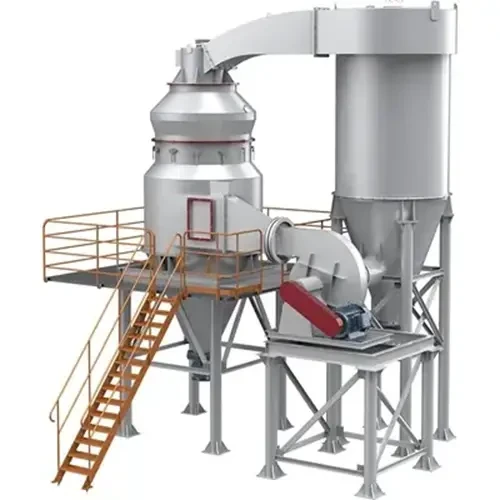
Quicklime discharged from kiln has uneven particle size and needs centralized crushing, screening and homogenization. Crushed quicklime particles are sent to milling equipment for fine processing and ground to 80~100 mesh. This procedure uniformly refines material particles and eliminates subsequent reaction differences caused by uneven lump quicklime size, ensuring uniform additive mixing and sufficient slaking reaction. The particle size uniformity and purity of quicklime directly determine the adequacy and efficiency of subsequent slaking reaction, which is critical for controlling pore structure, specific surface area and overall quality of finished high specific surface area calcium hydroxide.
Additive Mixing
This is the core procedure for preparing high specific surface area calcium hydroxide and the key process distinguishing it from ordinary slaked lime production lines. Pre-ground quicklime powder is quantitatively conveyed to the additive mixing system by high-precision weighing feeders. Special modified additives are accurately dosed according to process ratio and mixed under full sealed stirring.
The special additives can effectively inhibit agglomeration and accumulation of quicklime particles during hydration, break particle aggregation and form loose porous micro-pore structure in finished products. It serves as the core guarantee for products to stably reach high specific surface area of 40㎡/g.
Constant-temperature Slaking
Uniformly mixed quicklime-additive mixture is quantitatively fed into two-stage lime slaker. A twin-shaft agitator works as the primary slaking tank for preliminary slaking, and a chain stirring slaker is used for material ripening and deep slaking. The chain stirring slaker precisely controls reaction conditions: stable reaction temperature at 80~90℃, reaction duration of 30~45 minutes and accurate water dosing according to process standards.
With continuous stirring, calcium oxide fully contacts with water and additives for fast and thorough hydration reaction to generate fine calcium hydroxide slurry with complete pore structure. It effectively prevents incomplete reaction, material caking and undercooking, laying a solid foundation for high activity of finished products.
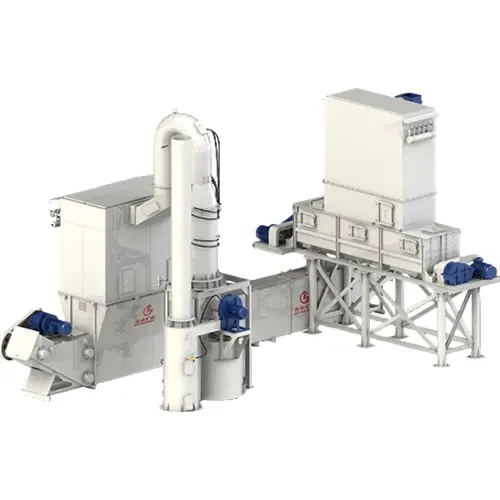
Flash Drying
Slaked calcium hydroxide slurry must be immediately sent to special drying system for drying without long-time standing. Static placement will lead to shrinkage and collapse of powder pores, directly reducing specific surface area and attenuating activity. Flash drying is the key procedure to fix high specific surface area microstructure. Precise temperature-controlled drying keeps finished moisture strictly ≤1%, locks loose porous powder structure, stabilizes product specific surface area and reactivity and prevents performance degradation of finished products over time.
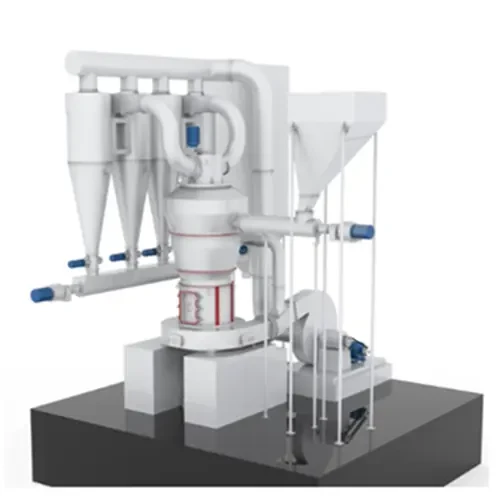
Fine Powder Classification
Dried calcium hydroxide powder is sent to dedicated calcium hydroxide classifier for grading screening. The classifier only performs classification without mechanical grinding on calcium hydroxide powder, so as to maximally preserve powder pore structure and retain BET index. Qualified powder meeting requirements on particle size, pore and activity enters the next procedure. Coarse particles and unqualified materials with insufficient reaction or defective structure automatically flow back to the front of slaking section for reprocessing through slaking, drying and classification, realizing closed-loop production to ensure uniform quality of delivered products without defective outflow.
Sealed Storage
Sorted qualified high specific surface area calcium hydroxide finished products are stored in fully sealed warehouse, isolated from ambient air, water vapor and dust pollution to prevent moisture absorption, caking and internal pore collapse, avoiding decline of specific surface area and activity indicators. The stored finished products can either go through automatic packaging and warehousing directly or be conveyed and dosed on-site for desulfurization and deacidification working conditions, with stable product performance guaranteed throughout the whole process.
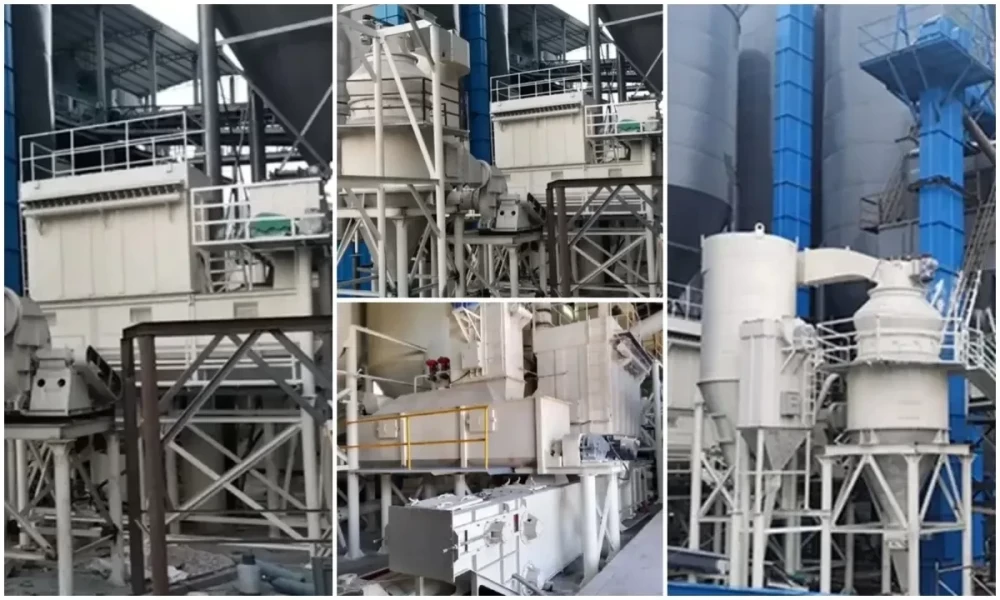
Application Scenarios of High Specific Surface Area Calcium Hydroxide Production Line
Technical Parameters of High Specific Surface Area Calcium Hydroxide Production Line
| Parameter Table of High Specific Surface Area Calcium Hydroxide Production Line | |
| Output Capacity | 5~50t/h |
| Fineness of Finished Product | 200~600 mesh |
| Purity of Finished Product | 90%~98% |
| Specific Surface Area | Stable above 40m²/g |
| Slaking Efficiency | ≥98% |
| Pore Volume | 0.2~0.8cm³/g |
| Median Particle Size (D50) | 0.1~2.0μm |
| * The above data is for reference only, actual parameters vary with raw materials | |
Frequently Asked Questions about High Specific Surface Area Calcium Hydroxide Production Line
Does high specific surface area calcium hydroxide production line need lime mill grinding?
High specific surface area calcium hydroxide production line generally does not require lime mill. The function of lime mill is to crush and refine large calcium hydroxide particles, break agglomerates, optimize particle size distribution, increase external contact area of particles and improve powder flowability and reaction dispersion. Grinding can only raise external surface area instead of generating internal micropores inside particles. Over-grinding of formed porous high specific surface area calcium hydroxide will collapse internal pores, reduce specific surface area and lower desulfurization activity.
What is the difference between high specific surface area calcium hydroxide production line and ordinary industrial calcium hydroxide production line?
Ordinary Industrial Calcium Hydroxide Production Line: Simple process flow. Quicklime is slaked with water then classified and discharged directly without pore expansion and modification procedures. The produced calcium hydroxide mostly has specific surface area below 15㎡/g with dense particles and low flue gas reaction efficiency.
High Specific Surface Area Calcium Hydroxide Production Line: Process upgrade based on traditional slaked lime production. It adopts two-stage slaking system and adds additive dry powder mixing system and flash drying system. The loose porous structure inside powder is formed and locked during slaking. The finished product achieves stable BET above 40㎡/g with higher desulfurization and deacidification reaction efficiency.
Will the additives added in high specific surface area calcium hydroxide production line affect finished product purity and desulfurization performance?
The pore-expanding & deagglomerating additives used are eco-friendly inorganic modified components without harmful impurities interfering desulfurization reaction. The additive dosage ratio is low. It only regulates calcium hydroxide crystal growth and inhibits particle agglomeration during hydration slaking to build loose porous structure. The additives will not reduce available calcium content of finished products, nor bring negative impacts on desulfurization & deacidification reactions or flue gas emission indicators. The finished products can steadily meet application requirements of various dry flue gas treatment environmental projects.
How to select calcination equipment for high specific surface area calcium hydroxide production line?
Rotary Kiln: Uniform calcination, high temperature control precision, fully heated material, strong quicklime activity stability and small batch difference. It has good adaptability to fragmented limestone raw materials with large fluctuation in particle size, suitable for medium & large-scale continuous mass production projects of high specific surface area calcium hydroxide. It has higher heat consumption and larger upfront equipment investment cost compared with Maerz kiln.
Maerz Kiln: Also known as double-chamber vertical shaft kiln. It has outstanding energy-saving advantages, high thermal efficiency and lower operation & maintenance cost than rotary kiln. It can produce high-activity soft-burned lime and stably supply downstream slaking procedures, more suitable for small & medium-scale production lines. However, it requires higher uniformity of limestone feed block size and has weaker capacity for fine fragmented materials than rotary kiln.
 Home
 Products
 About
 Call