

Water Mist Dust Collector
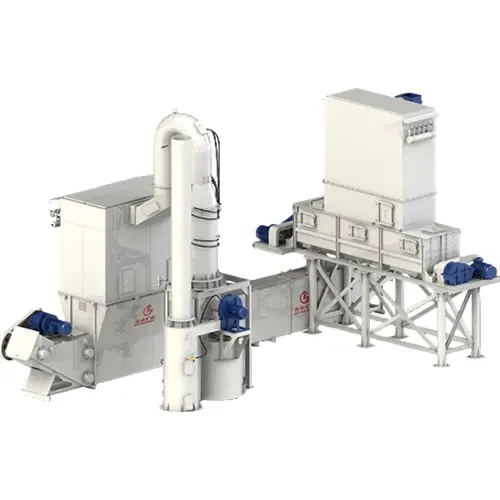
Function Description:Water mist dust collector works in conjunction with the pulse bag dust collector and is connected in series with the lime slaker. Pulse dedusting filters dust to reduce system load, followed by Water Mist Dust Collector technology to recover hot water and purify waste gas, achieving ultra-low emissions.
Suitable Materials:Calcium hydroxide (slaked lime or hydrated lime)
Water Mist Dust Collector Introduction
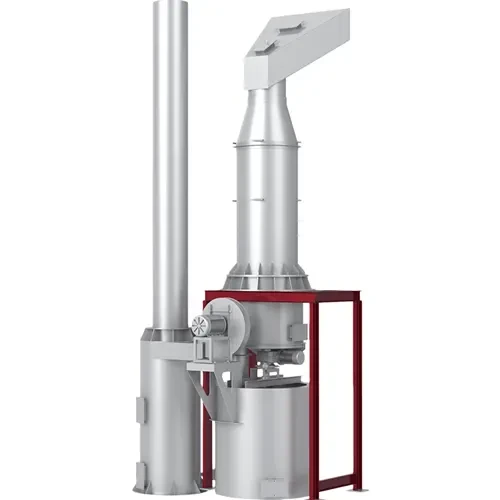
The water mist dust collector adopts patented pulse water mist dust removal technology. It is connected in series with the pulse baghouse filter on the lime digester. While recovering and reusing heat from the digestion reaction, it delivers reliable dust removal performance with nearly zero wastewater discharge. When matched with the pulse baghouse filter, it not only lowers the performance requirement for filter bags but also achieves ultra-low emission of waste gas ≤10mg/m³.
Advantages of Water Mist Dust Collector
Structural Features
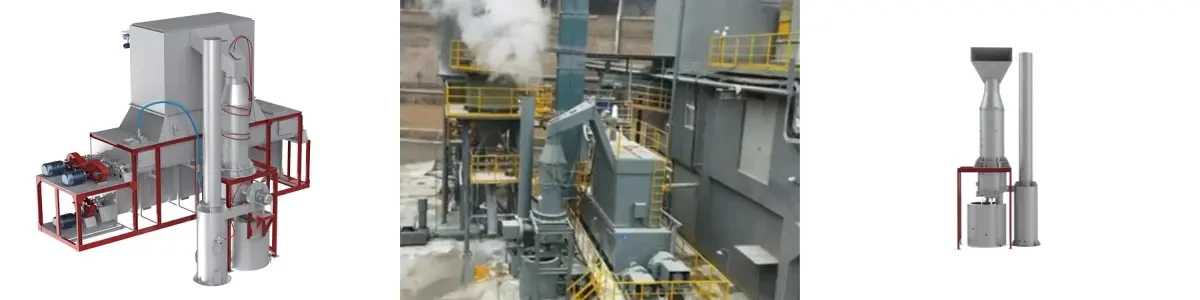
Spray System: Water film anti-adhesion technology is applied on pipeline side walls. Centrifugal water pump provides stable water pressure and flow. Combined with spray nozzles, it cools and humidifies waste gas for primary dust removal.
Atomizing System: A large quantity of micron-sized water mist is generated by atomizing nozzles to capture fine dust particles.
Dust Removal System: Gas-liquid separation is realized by mist eliminator. Clean gas is discharged while hot water is recycled.
Circulation System: Equipped with two circulating water pumps. Hot water at 60~80°C is delivered to the lime digester, and the remaining lower-temperature hot water is sent to the spray system.
Performance Advantages
Ultra-low Emission: Multi-stage dust removal technology offers excellent capture effect on fine dust and hydrophobic dust (especially "stiff ash" generated during lime digestion), with stable emission concentration ≤10mg/m³.
High Efficiency & Energy Saving: It fully recovers heat produced by lime digestion for reuse in the digestion reaction. Hot water improves reaction efficiency and cuts energy consumption at source.
Recycled Water Supply: High water resource utilization with nearly zero wastewater discharge. Part of the process wastewater collected by the system is used for lime digestion, and the rest for spray scrubbing.
Dual Protection: Working together with pulse baghouse filter, it properly reduces the performance requirement for filter bags. Even if filter bags get damaged, the water mist dust collector can still capture fine dust, providing sufficient maintenance time for bag replacement.
Water Mist Dust Collector Process Flow
Pulse Dust Filtration
Lime digestion produces a large amount of hot steam (humid waste gas) and calcium hydroxide dust. The waste gas passes through the pulse baghouse filter for primary filtration to remove most dust, reduce the workload of the subsequent water mist dust collector and prevent calcium hydroxide powder agglomeration from blocking spray nozzles.
Spray Scrubbing
Pre-filtered waste gas enters the water mist dust collector. Spray nozzles form uniform and fine water curtain to cool and humidify waste gas above 90℃ and remove most large-size dust particles.
Water Mist Dust Capture
Then atomizing nozzles produce plenty of micron-sized water mist to trap fine dust. Water mist condenses after contacting dust and settles with water flow. Gas-liquid separation is completed by mist eliminator. Hot water flows into circulating water pumps, and clean gas is discharged under the action of high-pressure centrifugal fan to realize ultra-low emission ≤10mg/m³.
Hot Water Recovery
Circulating water pumps preferentially deliver collected hot water (60~80°C) to the lime digester for digestion reaction. The remaining lower-temperature hot water (≤60°C) is transported to the spray system, together with a small amount of supplementary cold water (3%~5%) for spray scrubbing, achieving near-zero wastewater discharge.
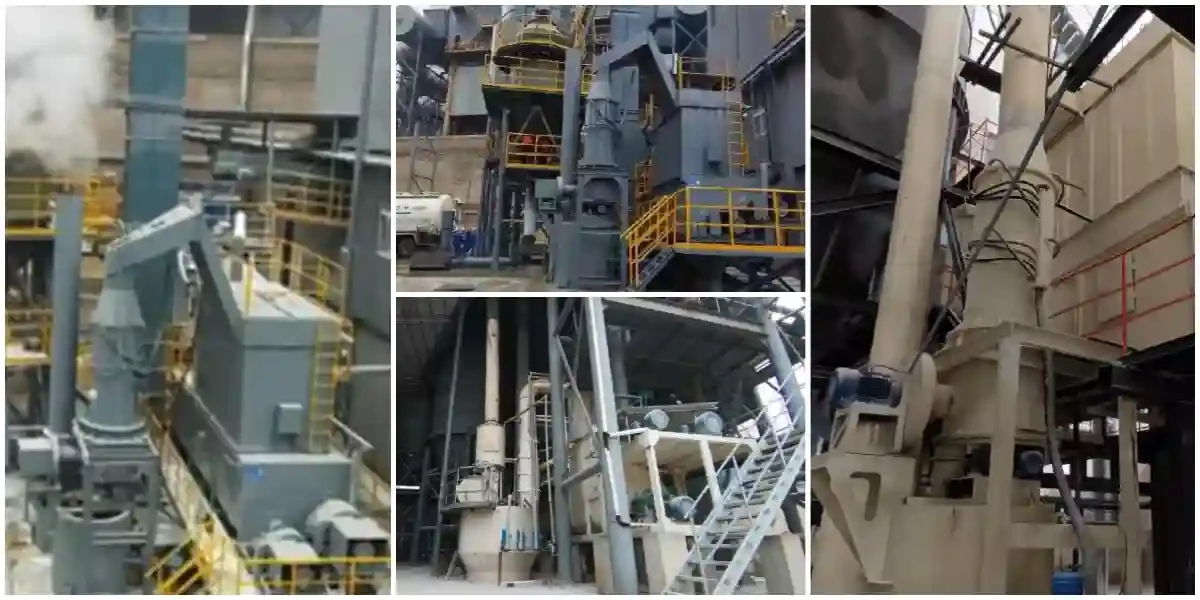
Application of Water Mist Dust Collector
Technical Parameters of Water Mist Dust Collector
| GK Water Mist Dust Collector Parameter Table | ||
| Equipment Name | Motor Power (kW) | Quantity |
High-pressure Centrifugal Fan | 18.5 | 1 |
Spray Water Pump | 3 | 1 |
| Circulating Water Pump | 4 | 2 |
Frequently Asked Questions of Water Mist Dust Collector
Can the water mist dust collector be used before the pulse dust collector?
Waste gas treatment for lime digestion must strictly follow the process sequence: dry pulse dust removal first, then wet water mist dust removal. Calcium hydroxide dust features strong hygroscopicity. If treated by wet process first, calcium hydroxide dust tends to agglomerate, clog spray nozzles and form hardened layer on filter bags, resulting in bag blinding.
Does the water mist dust collector consume large amounts of water?
The water consumption of water mist dust collector is low. Circulating water accounts for more than 95% while supplementary water only takes up 3%~5%. It is a low-water-consumption and high-recovery process configuration without water waste.
Does the water mist dust collector have desulfurization effect?
The water mist dust collector has limited auxiliary desulfurization capacity. After absorbing calcium hydroxide dust, the circulating water becomes alkaline and can neutralize acidic SO₂. However its desulfurization efficiency is relatively low with limited applicable scenarios and it cannot replace dedicated desulfurization equipment.
 Home
 Products
 About
 Call