

Comparative Analysis of Raymond Mill and UltraFine Ring Roller Mill
- Time:2026-11-05
- Views:3
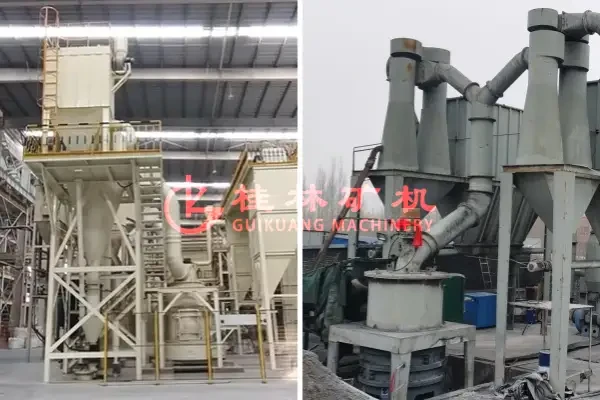
Raymond mills and ultra-fine ring roller mills are both grinding machines with good overall cost performance. They serve different application fields and complement each other. Raymond mills are suitable for processing medium-fine powder of 80–400 mesh, while ultra-fine ring roller mills are for ultra-fine powder of 400–2500 mesh.
Core standards cited in this paper: JB/T 13877-2020 Pendulum Grinding Mill, JB/T 14059-2020 Ultra-fine Ring Roller Mill, GB/T 50542-2019 Standard for Powder Engineering Design.
Comparative Analysis of Raymond Mill and Ultra-Fine Ring Roller Mill
Working Principle of Raymond Mill
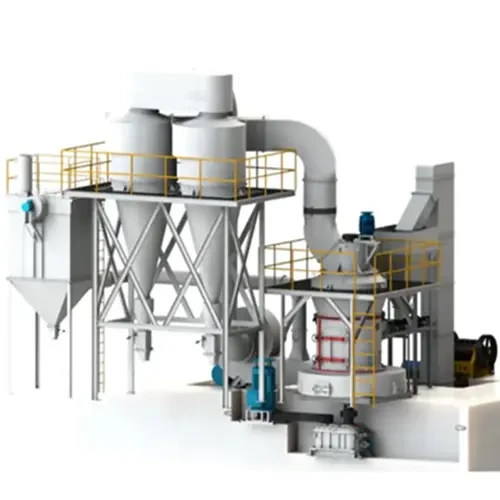
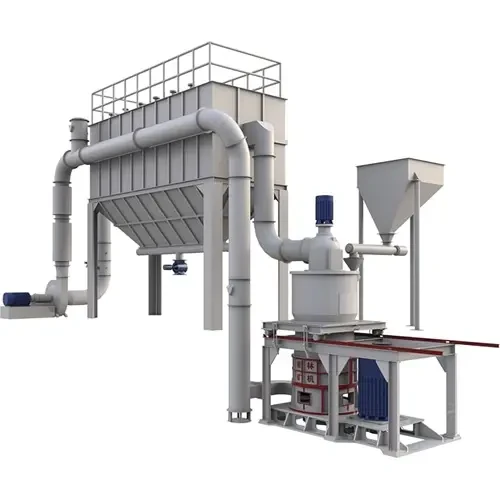
The Raymond Mill adopts multiple grinding rollers (≥2) to crush materials around one grinding ring. During operation, the rotating scoops lift materials and throw them into the material layer between rollers and ring. Driven by centrifugal force, the grinding rollers press tightly against the ring to crush materials. The classifier consists of rotor and blades. Fineness of finished powder is controlled by adjusting rotating speed. Coarse powder returns for regrinding while qualified fine powder enters the collection system. The finished powder features uniform particle size, and its fineness can be adjusted freely from 80 mesh to 400 mesh.
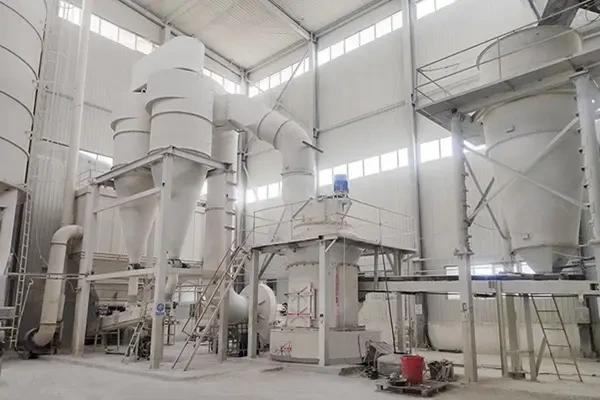
80–400 mesh is the high-efficiency grinding range of Raymond Mill. Though it can barely process powder finer than 400 mesh, the classifier wheel speed has to be greatly raised and system air volume reduced sharply to get finer products. This prevents qualified fine powder from being discharged timely and leads to sharp capacity drop. Fineness up to 600 mesh can be achieved by adding pressurizing devices (such as high-pressure suspension roller mill) or installing an ultra-fine classifier, but its efficient grinding range remains 80–400 mesh.
Working Principle of Ultra-Fine Ring Roller Mill
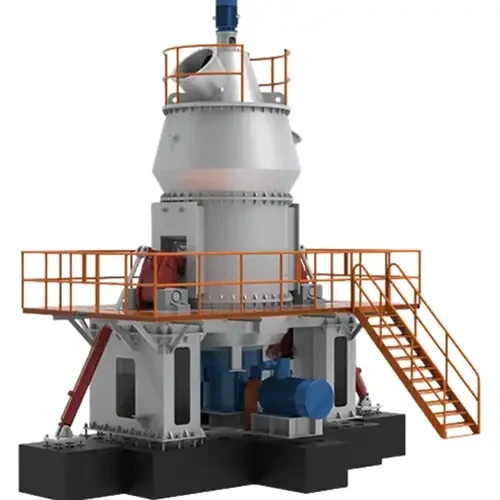
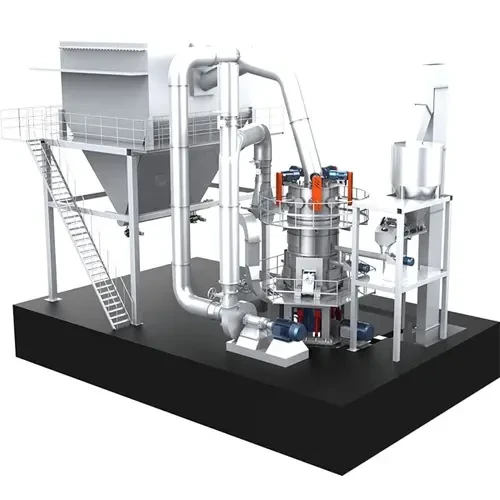
The ultra-fine ring roller mill works with multiple grinding rings and rollers. Each ring is fitted with more than 15 rollers. When running, rollers roll tightly against the inner wall of grinding ring driven by the rotary table. Materials form 2–4 stacked material layers inside the grinding chamber and are crushed repeatedly by groups of rollers and rings for ultra-fine grinding. It adopts centrifugal turbine classifier with infinitely adjustable rotating speed. A secondary high-precision classifier is optional. The finished powder has concentrated particle size distribution, and fineness can be precisely controlled from 400 mesh to 2500 mesh.
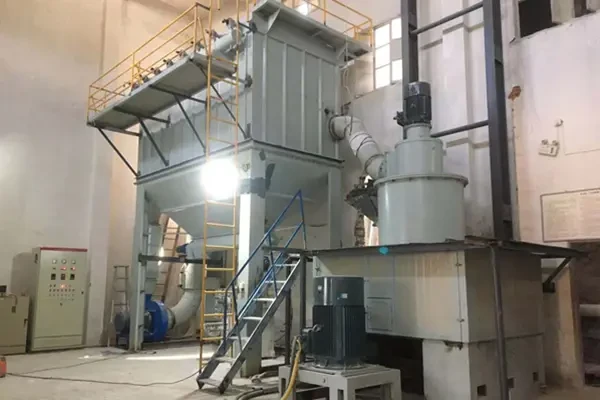
Although the ultra-fine ring roller mill can also produce 80–400 mesh medium-fine powder, it will be over-specified with poor cost performance. Its precision classifier has to run at much lower speed together with reduced system air volume to weaken classification accuracy and let coarser powder pass. Under such conditions, it cannot grind as efficiently as Raymond Mill, and its investment cost is far higher.
Performance Comparison Between Raymond Mill and Ultra-Fine Ring Roller Mill
The following test data is based on calcite, Mohs hardness 3, feed size ≤20 mm, finished powder moisture ≤1%. Raymond Mill is tested under 80–400 mesh condition (400 mesh as its practical upper limit). Ultra-fine ring roller mill is tested at 400–1250 mesh (secondary classifier is required for powder above 1250 mesh). Data is for reference only, actual parameters vary with raw materials and processes. Contact us for detailed parameters, our professional technical team will provide support.
Energy Utilization
Raymond Mill: Energy utilization rate 6%–9%, over-grinding rate ≤25%, power consumption over 38 kWh/t at 400 mesh. Energy consumption rises exponentially once fineness exceeds 325 mesh.
Ultra-Fine Ring Roller Mill: Multiple rollers and rings grind simultaneously. Energy utilization rate 12%–18%, over-grinding rate ≤18%, power consumption ranges from 45 to 55 kWh/t. No exponential energy surge within 400–1250 mesh range.
Application Scale
Raymond Mill: Suitable for non-flammable, non-explosive brittle materials with Mohs hardness ≤7. It has wide adaptability and high tolerance to impurities and hardness. Feed size ≤30 mm (≤35 mm for large models), feed moisture ≤6%. Drying equipment is required for high-moisture feed. Single unit capacity: 0.3–35 t/h, maximum annual output ≤300,000 tons. Mainly for medium and small-scale regular powder production of 80–400 mesh.
Ultra-Fine Ring Roller Mill: Suitable for brittle non-metallic minerals of medium-low hardness (Mohs ≤7). It has strict requirements on feed size, moisture and impurity. Feed size ≤20 mm, feed moisture ≤4%. Sticking and blocking easily occur when processing high-moisture and sticky materials, so drying equipment and pulse membrane bag dust collector are necessary. Single unit capacity: 0.6–10 t/h, annual output 10,000–100,000 tons. It is the main equipment for medium and small-scale ultra-fine powder above 400 mesh.
Finished Fineness
Raymond Mill: Equipped with dynamic classifier (rotary impeller). Fineness 80–400 mesh with uniform particle size, 325 mesh sieve pass rate ≥95%. It can reach 600 mesh with ultra-fine classifier or high-pressure suspension device, but sieve pass rate and capacity are limited above 400 mesh. Its efficient grinding range stays 80–400 mesh.
Ultra-Fine Ring Roller Mill: High-precision centrifugal turbine classifier (single/multi-wheel optional). Fineness 400–2500 mesh with concentrated particle size and high classification precision. D97 particle size can be precisely controlled. Secondary high-precision classifier is needed for powder finer than 1250 mesh.
Operation & Maintenance Cost
Raymond Mill: Low initial investment, only 50%–60% of ultra-fine ring roller mill. Core wear parts are grinding roller and ring, made of standard high manganese steel. Service life 800–2500 hours for calcite grinding. Downtime for replacement: 4–6 hours. Simple structure for easy maintenance.
Ultra-Fine Ring Roller Mill: Higher price than Raymond Mill but economical compared with other ultra-fine grinding mills such as ultra-fine vertical mill. Core wear parts are grinding roller and ring of high chromium wear-resistant alloy. Service life 6000–10000 hours for calcite grinding. Downtime for replacement: 8–12 hours. Precision structure requiring skilled maintenance technicians.
How to Choose Between Raymond Mill and Ultra-Fine Ring Roller Mill?
Both Raymond Mill and ultra-fine ring roller mill are high-efficiency grinding machines with good overall cost performance, yet they serve different application scenarios. Fineness range is the key factor for equipment selection.
Applicable Scenarios of Raymond Mill
Raymond Mill fits medium and small-scale production of 80–400 mesh medium-fine powder. It processes non-flammable, non-explosive brittle materials with Mohs hardness ≤7. If you need powder finer than 400 mesh, ultra-fine grinding equipment is generally recommended. Adding an ultra-fine classifier to Raymond Mill is only considered when you already own the mill and want to expand ultra-fine powder business.
Applicable Scenarios of Ultra-Fine Ring Roller Mill
Ultra-fine ring roller mill is designed for medium and small-scale ultra-fine powder of 400–2500 mesh. It mainly processes medium-low hardness brittle non-metallic minerals with Mohs hardness ≤7. For high-output large-scale ultra-fine powder production, ultra-fine vertical mill is preferred. For ultra-fine grinding of hard materials such as quartz, ball mill + air classifier line is recommended.
| Property Comparison of Raymond Mill and Ultra-Fine Ring Roller Mill | ||
| Comparison Item | Raymond Mill | Ultra-Fine Ring Roller Mill |
| Finished Powder | Uniform particle size, 325 mesh sieve pass rate ≥95% | Concentrated particle size, controllable D97 |
| 80–400 Mesh Medium-Fine Powder | High-efficiency grinding range | Over-specified, low efficiency |
| 400–2500 Mesh Ultra-Fine Powder | Limited fineness (600 mesh available with special process) | High-efficiency grinding (secondary classifier required above 1250 mesh) |
| Hard Material (Mohs Hardness>7) | Fast wear, upgrade grinding parts e.g. ceramic liner or switch to high-pressure suspension mill | Not recommended (for ≤7 medium-low hardness), ball mill classification line suggested |
| High-Moisture Material (Moisture>6%) | Feed moisture ≤6%, pre-drying equipment needed | Feed moisture ≤4%, dryer and pulse membrane bag dust collector required |
| Medium & Small Scale Production | Low investment, only 50%–60% of ultra-fine ring roller mill | Higher than Raymond Mill, lower than other ultra-fine mills |
| Large Scale Production (Annual Output ≥300,000 Tons) | Large-size Raymond Mill or multi-machine parallel operation | Capacity limited, ultra-fine vertical mill recommended |
| Operation & Maintenance | Simple structure, easy maintenance | Precision structure, requires skilled operators |
FAQ About Raymond Mill and Ultra-Fine Ring Roller Mill
Which one for 80–400 mesh medium-fine powder, Raymond Mill or ultra-fine ring roller mill?
Choose Raymond Mill for 80–400 mesh powder. As its name implies, ultra-fine ring roller mill is designed for ultra-fine powder (400–2500 mesh). Some suppliers may recommend ultra-fine ring roller mill for 80–400 mesh grinding. It can run, yet not cost-effective or efficient compared with Raymond Mill.
Can Raymond Mill with ultra-fine classifier achieve the same effect as ultra-fine ring roller mill?
No. Even fitted with an ultra-fine classifier to produce 600 mesh powder, Raymond Mill’s efficient grinding range remains 80–400 mesh. It is cheaper, but ultra-fine ring roller mill is preferred for long-term ultra-fine powder production.
Can ultra-fine ring roller mill replace Raymond Mill?
No. They complement each other and cannot replace one another. They target different fineness ranges. Raymond Mill works for 80–400 mesh medium-fine powder while ultra-fine ring roller mill is for 400–2500 mesh ultra-fine powder. Confirm your target fineness before selecting equipment.
- Previous Article:Not Available
- Next Article:Comparative Analysis Between Raymond Mill and Vertical Roller Mill
 Home
 Products
 About
 Call